





What's Happening?
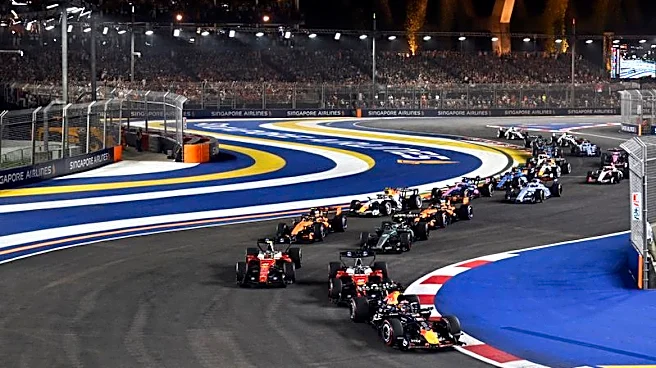
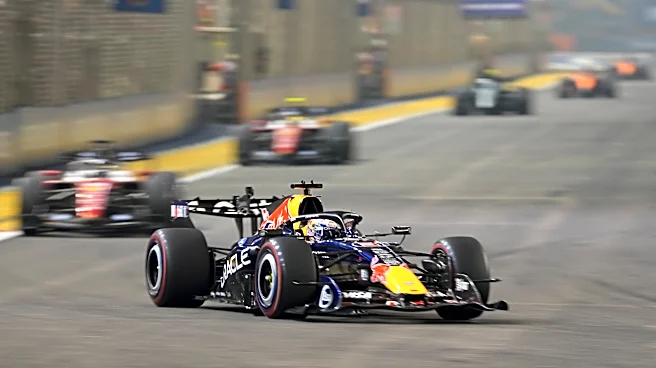
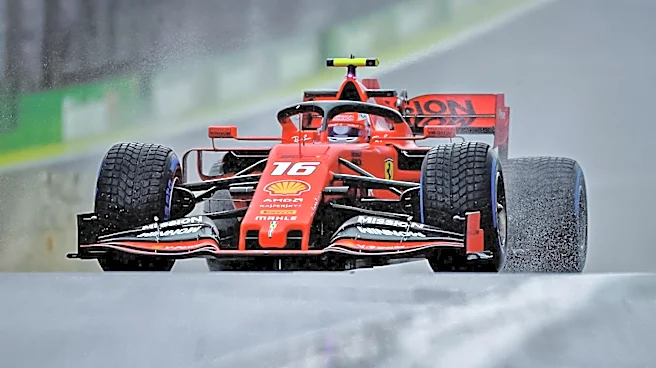
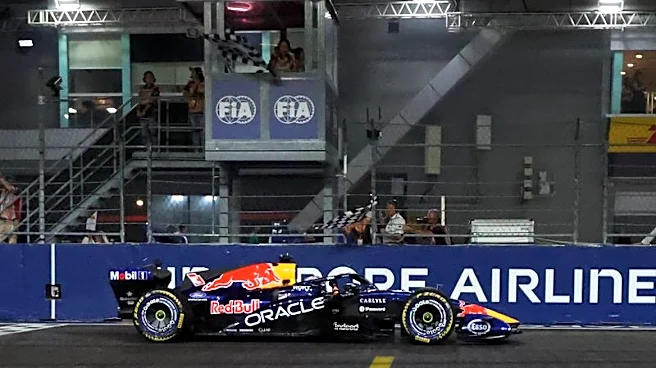
During the Singapore Grand Prix, Ferrari driver Charles Leclerc reported that his car, the SF26, began braking on its own. The incident occurred at Turn 13 on Lap 46, a slower corner on the Marina Bay Street Circuit. Leclerc communicated the issue to
his race engineer, Bryan Bozzi, via an untelevised team radio message, stating, "What the **** happened? The car started to brake on its own!" He expressed concern that if the fault recurred at a faster corner, it could lead to a crash. Bozzi initially advised Leclerc to "keep pushing" and assured him that he would try to fix it. Two laps later, Bozzi instructed a settings change, "white 10 position two," which appeared to resolve the mysterious braking problem. Leclerc did not report the issue again during the race and went on to finish in second place, 7.3 seconds behind Max Verstappen.
Why It's Important?
This incident highlights potential reliability and safety concerns within high-performance racing, specifically in Formula 1. An uncommanded braking event, even if brief, can have severe consequences in a sport where precision and control are paramount. For Ferrari, a team with a storied history in F1, such technical glitches can impact driver confidence and raise questions about the car's engineering integrity. While the issue was seemingly resolved during the race, its occurrence underscores the complex interplay of advanced technology and human control in modern F1 cars. The fact that the radio message was initially untelevised and later reported to have been removed from official transcripts by Formula 1 Management (FOM) could also raise transparency concerns within the sport, potentially affecting fan trust and media scrutiny regarding how such incidents are communicated.
What's Next?
Ferrari will likely conduct a thorough investigation into the cause of the uncommanded braking incident to prevent future occurrences. This will involve analyzing telemetry data from Leclerc's SF26 to pinpoint the exact malfunction. The team will aim to implement corrective measures, whether through software updates or mechanical adjustments, to ensure the car's reliability and driver safety in upcoming races. The incident may also prompt discussions within Formula 1 regarding the transparency of technical issues and the handling of team radio communications, especially if reports of message removal are confirmed. Competitors will be observing Ferrari's response closely, as any perceived vulnerability could influence their own strategies and development efforts. The next race in Austin will be a crucial test for Ferrari to demonstrate that the issue has been fully addressed.
Beyond the Headlines
The incident with Charles Leclerc's car touches upon the broader ethical and safety considerations in professional motorsport. The potential for a car to brake independently raises questions about the fail-safe mechanisms in place and the extent of human override capabilities in highly automated racing machines. Beyond the immediate safety implications for the driver, such technical anomalies can influence race outcomes, championship standings, and the overall integrity of the competition. The reported removal of the radio message from official transcripts, if true, could also spark a debate about information control and the public's right to know about critical incidents in sports. This could lead to calls for greater transparency from governing bodies and teams, ensuring that technical issues are openly acknowledged and addressed, fostering trust among fans and stakeholders in the sport's fairness and safety standards.