


What's Happening?
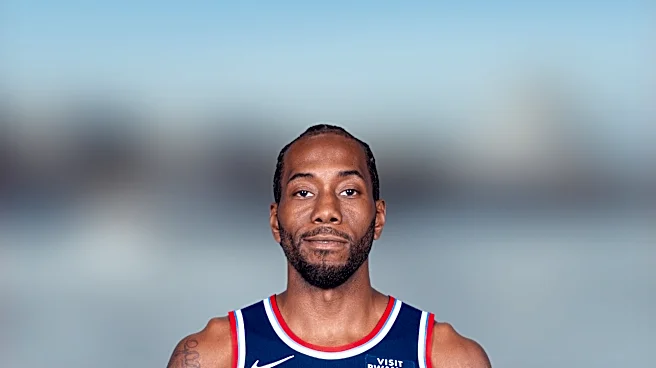
The National Basketball Association (NBA) has publicly refuted an ESPN report concerning its investigation into whether Los Angeles Clippers owner Steve Ballmer funneled money to player Kawhi Leonard. ESPN's report, authored by Don Van Natta Jr., Baxter
Holmes, and Ramona Shelburne, claimed that the NBA's probe found no evidence of Ballmer circumventing the salary cap by using team sponsors to pay Leonard. The allegations centered on Leonard's $28 million endorsement deal with the now-bankrupt tech firm Aspiration, which was reportedly a "no-show" arrangement designed to pay Leonard outside his Clippers contract. The ESPN report indicated that investigators examined internal emails, text messages, and financial records, extending their inquiry to other team sponsors like Daktronics and Boingo Wireless, but found no direct link between Ballmer and these arrangements. The Clippers maintain they acted appropriately, stating that connecting players with business partners is standard practice and denying any negotiation or dictation of endorsement terms to funnel money to Leonard.
Why It's Important?
This dispute between the NBA and ESPN highlights the significant implications of salary cap circumvention allegations in professional sports. If the initial ESPN report were accurate, it would significantly de-escalate what was considered one of the most serious alleged salary-cap scandals in recent NBA history. However, the NBA's strong denial, through spokesman Mike Bass, introduces uncertainty and suggests that the league's findings may differ substantially from ESPN's account. Salary cap violations can lead to severe penalties, including multi-million dollar fines, loss of draft picks, voided contracts, and suspensions for team personnel. The outcome of this investigation could set a precedent for how the NBA monitors and enforces its financial regulations, impacting team operations, player endorsements, and the integrity of the league's competitive balance. The ongoing disagreement underscores the high stakes involved for both the Clippers organization and the NBA's reputation.
What's Next?
The NBA's investigation into the Los Angeles Clippers and Kawhi Leonard is ongoing, despite ESPN's report suggesting a lack of evidence against owner Steve Ballmer. NBA spokesman Mike Bass explicitly stated that ESPN's article contained "numerous and significant inaccuracies" and that the league declined to cooperate with ESPN for the report. Bass emphasized that the full results of the investigation will be made public once it is concluded, indicating that the probe is far from over. Until the NBA releases its official findings, any conclusions about the Clippers' culpability or innocence remain premature. The league has not specified which details in ESPN's report were inaccurate or whether it has uncovered any definitive evidence against Ballmer. The resolution of this investigation will determine potential penalties for the Clippers, if any, and will clarify the league's stance on team-player endorsement relationships and salary cap compliance.
Beyond the Headlines
The public disagreement between the NBA and ESPN over the Kawhi Leonard investigation reveals deeper tensions regarding journalistic reporting on ongoing sports investigations and the league's control over its narrative. The NBA's blunt statement challenging ESPN's report, without providing specific counter-evidence, raises questions about transparency and the flow of information during sensitive probes. This situation could influence how media outlets approach reporting on internal league matters and how the NBA manages information leaks or premature conclusions. Furthermore, the case touches upon the complex relationship between professional athletes, their teams, and corporate sponsors, particularly in high-value endorsement deals. It highlights the constant scrutiny faced by sports organizations to ensure fair play and adherence to financial regulations, especially when star players are involved. The outcome will not only impact the Clippers but also potentially reshape the dynamics of player recruitment and endorsement practices across the league, emphasizing the need for clear guidelines and robust oversight.