







What's Happening?
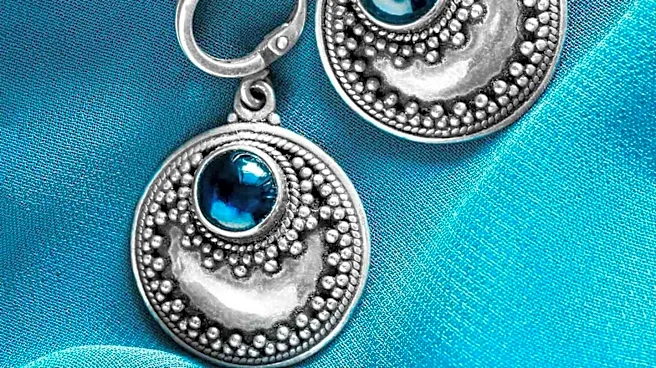
Persis Collection, a retailer specializing in Persian turquoise jewelry, has released a guide to help consumers identify genuine Persian turquoise, particularly from the historic Neyshabur mining area. The guide emphasizes that while color, natural markings
(matrix), and treatment history provide clues, appearance alone cannot definitively prove a stone's origin or authenticity. It advises against home tests like scratching or applying chemicals, as these can damage the stone. Instead, the guide recommends asking sellers about the stone's treatment (untreated, stabilized, dyed, or reconstituted) and its source. Persis Collection sources its turquoise from artists in Mashhad, Khorasan, near the Neyshabur mine, and provides detailed product descriptions for its jewelry, including metal, weight, and stated stone origin.
Why It's Important?
The market for precious and semi-precious stones, including turquoise, is susceptible to misrepresentation and the sale of imitation products. For U.S. consumers and businesses involved in the jewelry trade, understanding how to identify genuine materials is crucial for ethical purchasing and maintaining consumer trust. The guide from Persis Collection highlights the complexities of verifying gemstone authenticity, which can impact the value and perceived quality of products. This issue is significant for the U.S. jewelry industry, as it relies on the integrity of its supply chains and the accurate labeling of products to protect both consumers and reputable businesses from fraud. The emphasis on transparency from sellers regarding stone treatment and origin is a key factor in ensuring fair trade practices.
What's Next?
The ongoing challenge of distinguishing genuine gemstones from imitations will likely lead to increased demand for transparent sourcing and detailed product information within the jewelry industry. Consumers are becoming more educated and are seeking assurances of authenticity, which may prompt more retailers to adopt comprehensive disclosure practices. Gemmological laboratories will continue to play a vital role in providing expert assessments for high-value pieces. Furthermore, educational initiatives, similar to Persis Collection's guide, may become more prevalent as businesses strive to empower consumers with the knowledge needed to make informed purchasing decisions in a complex market.
Beyond the Headlines
The issue of gemstone authenticity touches upon broader themes of cultural heritage and economic integrity. Persian turquoise, with its rich history and cultural significance, is often sought after for its unique qualities. The proliferation of imitations not only devalues the genuine product but also undermines the craftsmanship and traditions associated with its origin. Legally, misrepresentation of gemstones can lead to consumer protection issues and legal disputes. Ethically, businesses have a responsibility to provide accurate information to consumers, fostering trust and promoting fair market practices. The guide also subtly highlights the importance of supporting artisans and regions where these natural resources are traditionally sourced, contributing to the preservation of cultural and economic ecosystems.