



What's Happening?
Backcountry Tiny Homes has unveiled its new 'Retirement Retreat,' a 38-foot tiny house designed with an increased width of 10 feet, offering a more spacious and livable interior compared to conventional tiny homes. This model, built on a triple-axle gooseneck
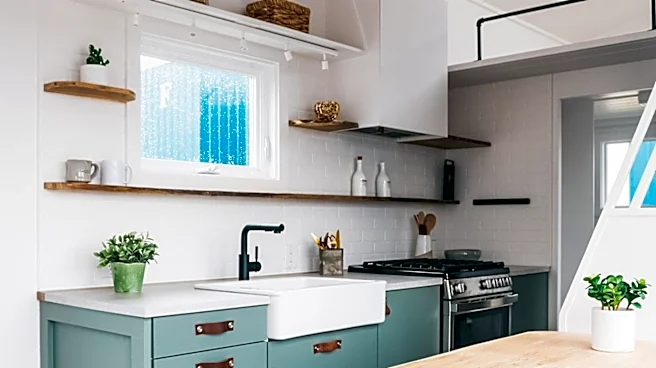
trailer, utilizes its extra width to create an interior layout that resembles a small apartment. The exterior features a mix of metal and knotty tongue and groove cedar cladding with a metal roof, while the interior boasts painted board and batten walls, knotty pine ceilings, and a combination of engineered hardwood and vinyl flooring. The design includes a well-proportioned living room with a wood-burning stove, a galley-style kitchen with quartz counters and full appliances, a bathroom with a shower and flushing toilet, and a laundry area. The main bedroom accommodates a king-sized bed with ample headroom, and a secondary loft provides additional space for storage, a guest room, or a hangout area. The 'Retirement Retreat' is available in three price points: turnkey for US$202,950, unfurnished for $186,575, and as a shell for $91,380, with delivery options across the U.S. and internationally.
Why It's Important?
The introduction of the 'Retirement Retreat' by Backcountry Tiny Homes signifies a notable evolution in the tiny house movement, addressing a common critique regarding the limited space and functionality of smaller models. By increasing the width to 10 feet, the design offers a more comfortable and practical living environment, potentially broadening the appeal of tiny homes to a wider demographic, including retirees or those seeking a more permanent, less restrictive living solution. This innovation could influence future tiny house designs, pushing manufacturers to explore creative ways to maximize interior space and amenities. While the increased width necessitates a permit for towing on U.S. roads, it reflects a growing consumer demand for tiny homes that do not compromise significantly on comfort or utility. This development could also impact the market for recreational vehicles and small modular homes, as it blurs the lines between these categories by offering apartment-like living in a towable format.
What's Next?
The 'Retirement Retreat' is currently available for purchase, with delivery options extending throughout the U.S. and internationally. Prospective buyers can contact Backcountry Tiny Homes directly for specific delivery rates. The need for a towing permit due to the increased width will require buyers to consider additional logistical planning for transportation. The success of this wider tiny house model could lead to other manufacturers adopting similar design principles, potentially establishing a new sub-category within the tiny home market focused on enhanced spaciousness and livability. This trend might also prompt regulatory bodies to review and potentially adapt towing regulations for wider recreational or modular homes, balancing safety concerns with the growing demand for more comfortable mobile living solutions. Furthermore, the integration of features like a wood-burning stove and mini-split air-conditioning system suggests a continued focus on energy efficiency and self-sufficiency in future tiny home designs.
Beyond the Headlines
This development in tiny home design reflects a broader societal shift towards sustainable living and minimalist lifestyles, where individuals seek to reduce their environmental footprint and simplify their possessions. The 'Retirement Retreat' caters to a demographic that values both mobility and comfort, suggesting a redefinition of retirement living that prioritizes flexibility and reduced overheads. The emphasis on clever use of space and integrated amenities highlights an ongoing innovation in compact living solutions, which could have implications for urban planning and affordable housing initiatives. As land becomes scarcer and housing costs rise, the appeal of well-designed, spacious tiny homes could grow, challenging traditional notions of homeownership and residential architecture. The ethical considerations around sustainable materials and energy consumption in such homes will also continue to be a focal point for environmentally conscious consumers and builders.