



What's Happening?
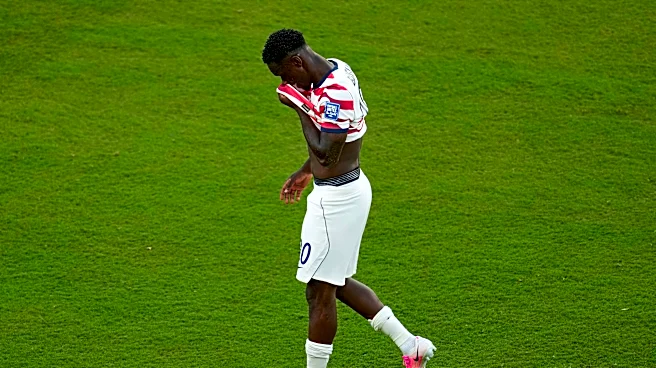
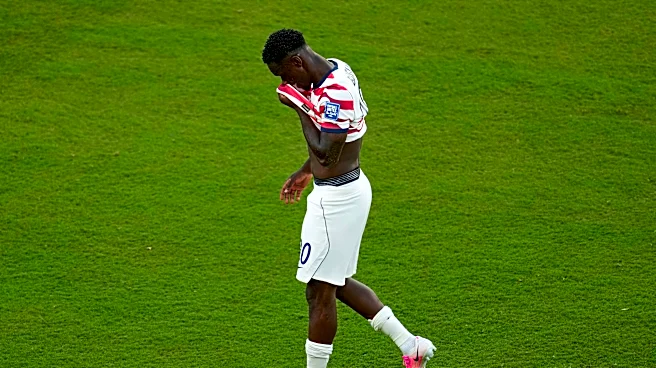
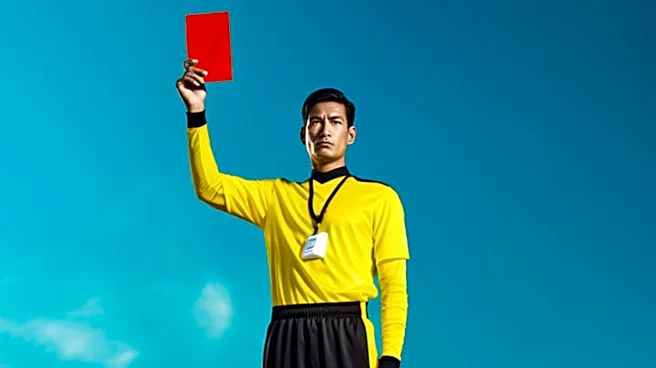
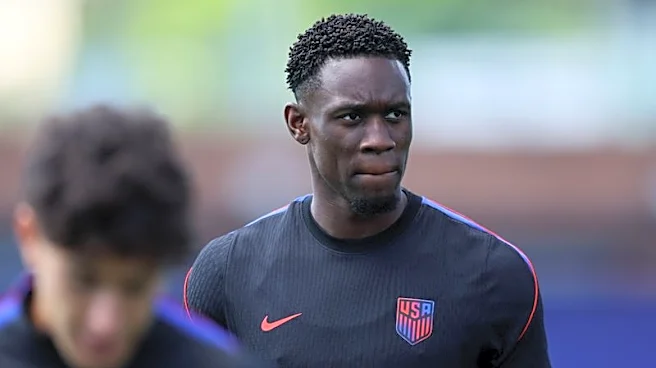
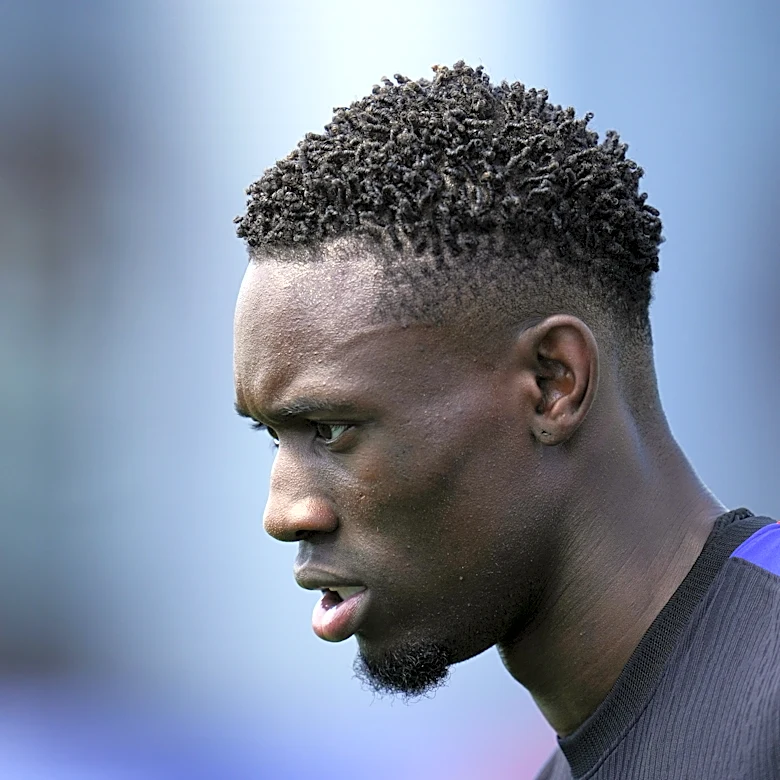
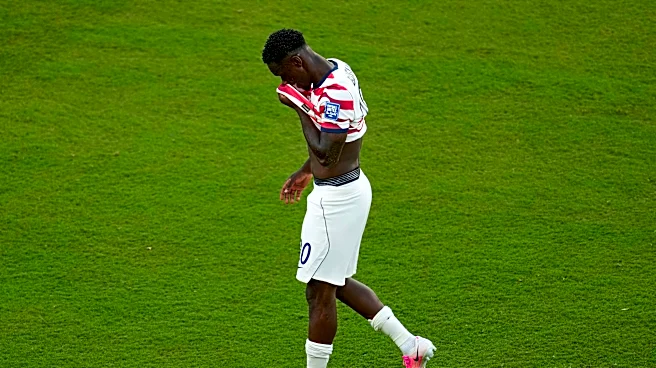
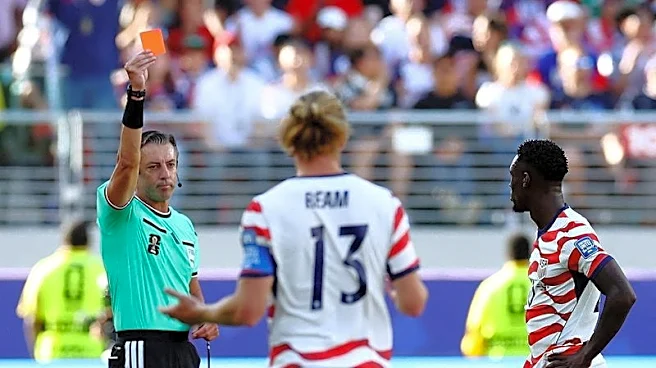
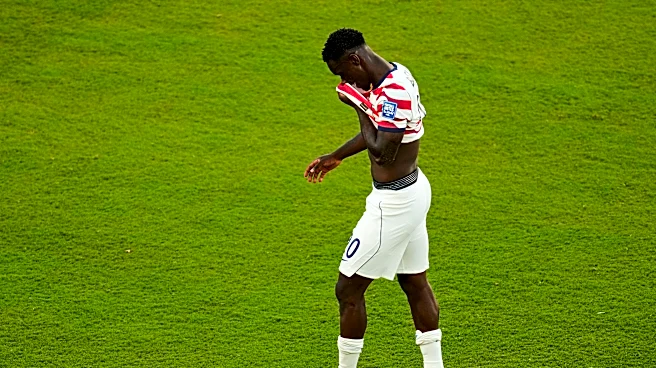
FIFA has fined U.S. soccer player Folarin Balogun $40,000 following a controversial tackle during a World Cup match against Bosnia and Herzegovina. The incident, which occurred in the 64th minute, resulted in Balogun receiving a red card for serious foul
play. Initially, no card was issued by Brazilian referee Raphael Claus, but after consulting the video assistant referee (VAR), the decision was made to dismiss Balogun. Despite the red card, FIFA's Disciplinary Committee later suspended Balogun's one-match ban, allowing him to play in the subsequent match against Belgium. The fine is to be paid jointly by Balogun and the U.S. Soccer Federation, which was found jointly liable. The decision to suspend the ban while imposing a fine has sparked significant controversy, with critics questioning the consistency and transparency of FIFA's disciplinary actions.
Why It's Important?
The decision by FIFA to fine Balogun while suspending his ban raises questions about the consistency and fairness of disciplinary actions in international soccer. This incident highlights the influence of video technology in officiating and the potential for subjective interpretation of rules. The involvement of President Trump, who reportedly contacted FIFA President Gianni Infantino, adds a political dimension to the controversy, suggesting potential interference in sports governance. This situation could set a precedent for future disciplinary actions, affecting how similar incidents are handled and perceived by the public and stakeholders. The controversy also underscores the challenges faced by governing bodies in maintaining the integrity and fairness of international competitions.
What's Next?
The fallout from this decision may lead to calls for greater transparency and consistency in FIFA's disciplinary processes. Stakeholders, including national soccer federations and players' associations, might push for clearer guidelines and accountability in the use of VAR and the application of disciplinary measures. The incident could also prompt discussions about the role of political figures in sports governance and the need to safeguard the independence of sporting bodies. As the World Cup progresses, FIFA may face increased scrutiny over its handling of disciplinary matters, potentially influencing future policy changes and reforms.