




What's Happening?
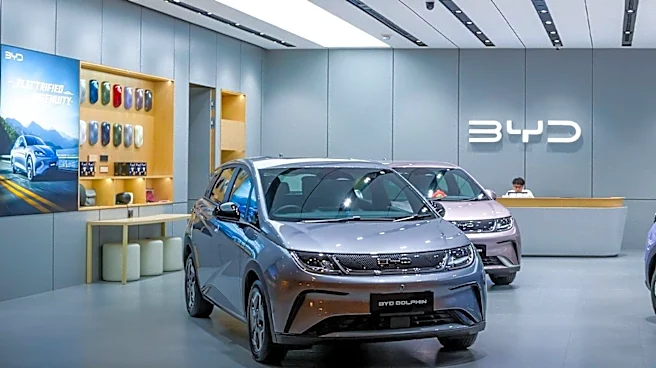
Brazil has imported $5.2 billion worth of Chinese vehicles in the first five months of 2026, surpassing Russia as China's largest overseas car market. This surge in imports, particularly of battery-electric and hybrid vehicles, has led Brazil to increase
tariffs on imported electric vehicles (EVs) and hybrids from 25-30% to 35%. The Brazilian government is using these tariffs and quotas to encourage Chinese automakers to establish local manufacturing facilities. The aim is to foster investment in local factories, supplier networks, and employment, rather than relying on imported kits that require minimal local resources for assembly.
Why It's Important?
The increased tariffs and push for local manufacturing reflect Brazil's strategy to leverage its purchasing power to boost domestic economic activity. By encouraging Chinese automakers like BYD, Chery, and Great Wall to build cars locally, Brazil aims to create jobs and strengthen its clean-car supply chain. This move could also lead to more competitive pricing in the Brazilian car market, as Chinese brands have already driven down average new-car transaction prices by 3.5% from the previous year. The policy could reshape the automotive landscape in Brazil, challenging legacy car manufacturers and potentially leading to a more robust local industry.
What's Next?
Chinese automakers may need to decide whether to invest in Brazilian manufacturing facilities to maintain their market share. This could lead to significant foreign direct investment in Brazil's automotive sector. Additionally, the Brazilian government may continue to adjust tariffs and quotas to balance foreign competition with local industry growth. The outcome of these policies could influence other countries' approaches to managing foreign automotive imports and local industry development.