


What's Happening?
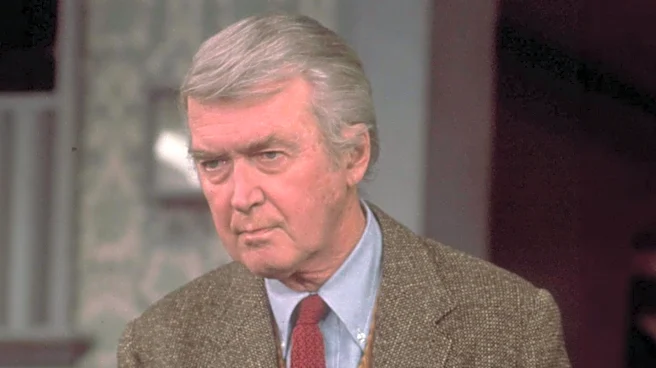
Before achieving widespread fame as Gilligan in 'Gilligan's Island', actor Bob Denver appeared alongside Hollywood legend James Stewart in the 1963 coming-of-age comedy 'Take Her, She's Mine'. This film marked Denver's second movie role, following his debut
in 1959's 'A Private's Affair'. At the time, Denver was known for his role as Maynard G. Krebs in 'The Many Loves of Dobie Gillis', a character that depicted beatnik culture. In 'Take Her, She's Mine', Denver played a beatnik coffeehouse crooner who interacts with Stewart's character, Frank Michaelson, an overprotective father. The film, directed by Henry Koster and written by Nunnally Johnson, was an adaptation of a 1961 Broadway play by Henry and Phoebe Ephron, inspired by their daughter Nora Ephron's college experiences.
Why It's Important?
This early film role for Bob Denver is significant as it placed him alongside a major Hollywood star like James Stewart, providing valuable experience before his iconic 'Gilligan's Island' role. For Denver, it was a stepping stone that showcased his comedic talent and ability to portray counter-cultural characters, which he had already established in television. For the film itself, 'Take Her, She's Mine' offered James Stewart a change of pace from his more dramatic and Western roles, allowing him to demonstrate his versatility in a lighter comedy. The film's connection to Nora Ephron's family history also adds a layer of cultural importance, linking it to a future influential figure in American cinema. The movie's release was notably impacted by the assassination of John F. Kennedy, leading to the recall of prints to remove references to the President, highlighting how real-world events can directly affect film distribution and content.
What's Next?
While 'Take Her, She's Mine' was released in 1963, its historical context and the involvement of notable figures like Bob Denver and James Stewart continue to be subjects of interest for film historians and fans. The film is available for viewing on platforms like YouTube, allowing contemporary audiences to experience this piece of cinematic history. For those interested in the careers of Denver and Stewart, or the early works of Nora Ephron's family, the film serves as a valuable artifact. Discussions around the film often revolve around its critical reception at the time, which was mixed, and its unexpected connection to a national tragedy. The film's availability ensures its continued presence in the discourse surrounding classic American cinema and the careers of its stars.
Beyond the Headlines
The story of 'Take Her, She's Mine' and Bob Denver's involvement offers a glimpse into the evolving landscape of American entertainment in the early 1960s. Denver's portrayal of a beatnik character reflects the cultural shifts occurring at the time, with counter-culture elements beginning to appear in mainstream media. The film's troubled release due to the JFK assassination underscores the profound impact of national events on the entertainment industry, demonstrating how even seemingly lighthearted productions can be affected by societal trauma. This incident highlights the sensitivity of public sentiment and the measures taken by studios to align content with the prevailing mood. Furthermore, the film's connection to the Ephron family provides a fascinating lineage to one of Hollywood's most celebrated screenwriters, illustrating how personal experiences can inspire creative works across generations and different media.