







What's Happening?
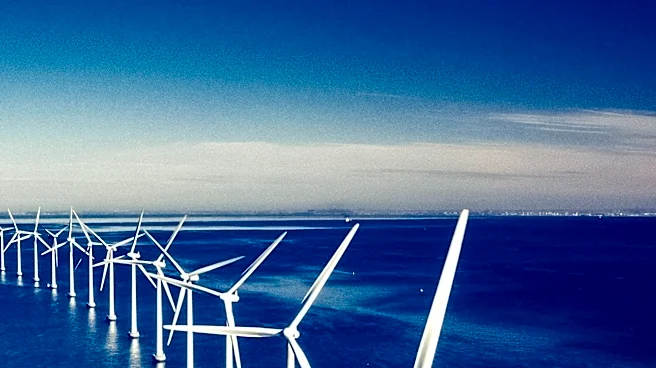
Wind farm developer Vineyard Wind and turbine supplier GE Vernova have settled a legal dispute concerning over $300 million in contested payments related to the $4.5 billion New England wind farm project. The conflict arose after GE Vernova, responsible
for designing, manufacturing, and installing the project’s wind turbine generators, threatened to terminate its $1.3 billion contract, claiming it was owed $360 million. Vineyard Wind, a joint venture between Spain’s Iberdrola and Denmark’s Copenhagen Infrastructure Partners, subsequently sued in a Boston state court. Vineyard Wind argued that it was justified in withholding payments after a turbine blade collapsed in 2024, causing two years of delays and requiring the replacement of other blades due to a widespread manufacturing flaw. A federal judge had previously blocked President Trump's administration from halting construction of the project, which began initial operations in February off the coast of Martha's Vineyard, Massachusetts. As part of the settlement, GE Vernova has withdrawn its termination notice and dropped an appeal of an injunction that required it to continue working on the project. Both parties have agreed to dismiss all pending legal claims, though the specific terms of the confidential settlement were not disclosed.
Why It's Important?
This settlement is crucial for the U.S. renewable energy sector, particularly for offshore wind development. The resolution of this high-profile dispute removes a significant obstacle for the Vineyard Wind project, which is a landmark initiative in the country's transition to clean energy. The initial legal battle highlighted the financial and logistical complexities inherent in large-scale renewable energy projects, especially when unforeseen technical issues arise. The collapse of a turbine blade and the subsequent payment dispute underscored the risks involved for both developers and suppliers, potentially impacting future investment and insurance considerations in the sector. The successful resolution, even with undisclosed terms, signals a path forward for complex projects and may help restore confidence among stakeholders. It also emphasizes the importance of robust contractual agreements and dispute resolution mechanisms in ensuring the continuity of critical infrastructure projects. The project's ability to overcome both administrative challenges and internal disputes sets a precedent for future offshore wind developments in the U.S., which are vital for meeting national climate goals and reducing reliance on fossil fuels.
What's Next?
With the legal dispute resolved, Vineyard Wind can now fully focus on the completion and ongoing operation of its 806-megawatt project off the coast of Martha's Vineyard. The withdrawal of GE Vernova's termination notice and the dismissal of all legal claims mean that the turbine supplier will continue its involvement, ensuring the necessary support for the wind farm. The confidential nature of the settlement terms suggests that both parties have found a mutually agreeable path forward, likely involving adjustments to payment schedules, responsibilities, or other contractual elements. This resolution could pave the way for smoother collaboration on future phases or similar projects in the U.S. offshore wind market. Other developers and suppliers in the renewable energy sector will likely observe the outcomes of this case to refine their own contractual frameworks and risk management strategies. The successful operation of Vineyard Wind will serve as a critical case study for the viability and challenges of large-scale offshore wind projects in the U.S., potentially influencing policy decisions and investment trends in the coming years.
Beyond the Headlines
The resolution of the GE Vernova and Vineyard Wind dispute extends beyond immediate project completion, touching upon broader implications for the nascent U.S. offshore wind industry. The incident involving the turbine blade collapse underscores the technological challenges and the need for continuous innovation and quality control in manufacturing. Such failures, even if resolved, can impact public perception and regulatory scrutiny of renewable energy infrastructure. The legal battle also highlights the intricate financial ecosystems supporting these massive projects, involving significant capital from international joint ventures and complex contractual relationships between multiple entities. The ability of the project to navigate both a federal injunction against the President Trump's administration and a major supplier dispute demonstrates the resilience required for pioneering large-scale renewable energy initiatives. This case could influence how future contracts are structured, potentially leading to more detailed clauses regarding risk allocation, defect liability, and dispute resolution in the offshore wind sector. Ultimately, the successful progression of Vineyard Wind is crucial for demonstrating the long-term feasibility and economic benefits of offshore wind power in the U.S., fostering greater investment and accelerating the energy transition.