






What's Happening?
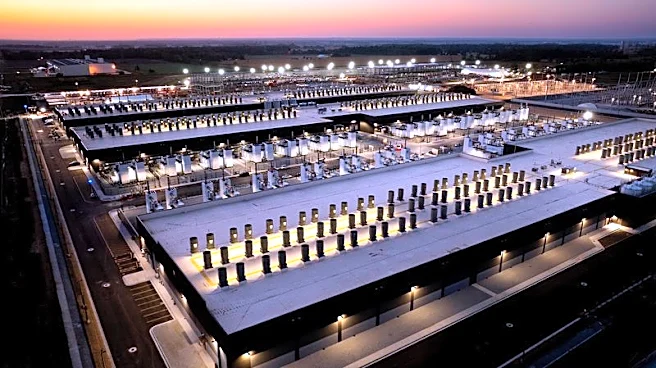
Amazon has significantly expanded its partnership with Nvidia, tripling its order of Nvidia GPU chips for its Amazon Web Services (AWS) data centers. This new agreement includes an additional 2 million Nvidia GPU chips, comprising Blackwell Ultra, Rubin,
and Rubin Ultra GPUs, which are slated for deployment in 2027 and 2028. This announcement, made during Nvidia's quarterly earnings call, follows an earlier commitment by Amazon to deploy over 1 million Nvidia GPUs starting this year, with demand reportedly exceeding initial expectations. While financial terms were not disclosed, the deal is estimated to be worth tens of billions of dollars given the unit costs of GPUs. The expanded collaboration extends beyond chip purchases, integrating Nvidia's networking hardware, open models, CPUs, data processing software, and robotics platform across AWS. This move comes even as Amazon continues to invest in its own AI chip development, including its Trainium chips for deep learning workloads and Arm-built Graviton CPUs, which compete with traditional server chips.
Why It's Important?
This substantial increase in Amazon's Nvidia chip order underscores the escalating demand for high-performance computing power driven by the rapid growth of artificial intelligence applications. For Nvidia, it solidifies its dominant position in the AI chip market, demonstrating continued strong demand for its advanced GPUs despite increasing competition from custom silicon developed by major tech companies. For Amazon, this investment is crucial for maintaining AWS's competitive edge in cloud computing, enabling it to offer cutting-edge AI infrastructure to its diverse client base, including startups, enterprises, AI labs, and governments. The expanded partnership also highlights a strategic decision by Amazon to both develop its own chips and heavily invest in Nvidia's technology, indicating a hybrid approach to meet the diverse and immense computational needs of the AI era. This trend of hyperscalers investing heavily in AI infrastructure will likely drive further innovation and competition in the semiconductor industry, impacting the broader technology landscape and the capabilities of AI services globally.
What's Next?
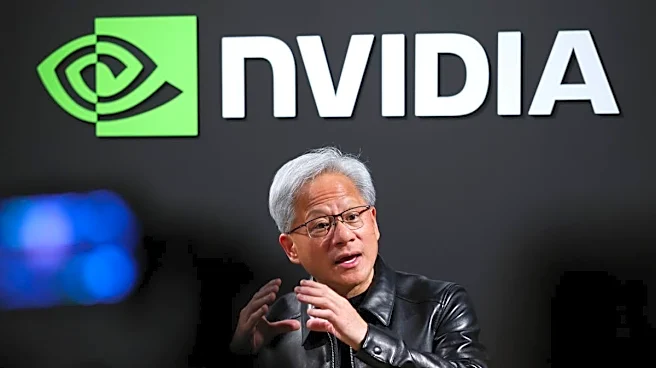
Nvidia plans to deliver the additional 2 million GPU chips to AWS data centers in 2027 and 2028, alongside an unspecified number of Vera CPUs. Nvidia CEO Jensen Huang anticipates significant growth for the company's Vera CPUs, projecting a new $200 billion market opportunity. Beyond AWS, Nvidia expects Vera CPUs to be deployed by other major hyperscalers, neocloud providers, AI labs, and system OEMs, with shipments already underway to lead partners like Oracle and SpaceXAI. The partnership also extends to Amazon's warehouse robotics, where Amazon plans to adopt Nvidia's full physical AI stack, including Omniverse, Cosmos, Isaac, and Jetson. On the enterprise front, AWS will host Nvidia's Nemotron family of open models on its Amazon Bedrock and SageMaker platforms. Nvidia reported strong financial results, with Q2 sales of $96.2 billion and data center revenue comprising $89 billion, up 117% year-over-year. The company projects Q3 revenue to reach $108 billion, with initial sales of its next-gen Rubin GPUs contributing to this growth. Nvidia has committed $279 billion to secure supply and manufacturing capacity for future data center projects, reflecting its long-term strategy to meet sustained AI demand.
Beyond the Headlines
The deepening alliance between Amazon and Nvidia, despite Amazon's internal chip development efforts, reveals a critical dynamic in the AI industry: the sheer scale of demand for AI compute power necessitates collaboration even among competitors. This 'co-opetition' model suggests that no single company, not even a tech giant like Amazon, can solely meet its AI infrastructure needs. The integration of Nvidia's full AI stack into AWS, from chips to robotics platforms and open models, indicates a move towards more holistic, vertically integrated AI solutions within cloud environments. This could lead to a standardization of certain AI development tools and platforms, potentially accelerating AI adoption and innovation across various industries. Furthermore, Nvidia's massive commitment to securing supply and manufacturing capacity highlights the intense pressure on the semiconductor industry to scale production to meet unprecedented demand, which could have long-term implications for global supply chains, raw material sourcing, and manufacturing investments. The emphasis on 'profitable tokens' by Nvidia's CEO underscores the economic imperative driving this AI arms race, where computational efficiency directly translates into business value.