



What's Happening?
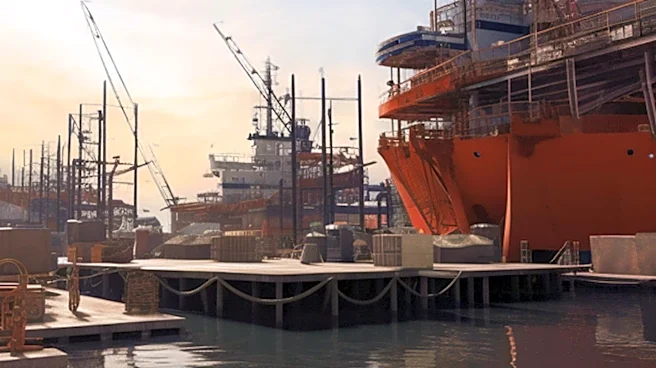
Nigeria has officially commenced the construction of a $3.5 billion deepwater port in Bakassi, Cross River State. This new facility is designed to accommodate large cargo vessels and serve as an alternative to the heavily congested ports in Lagos, which
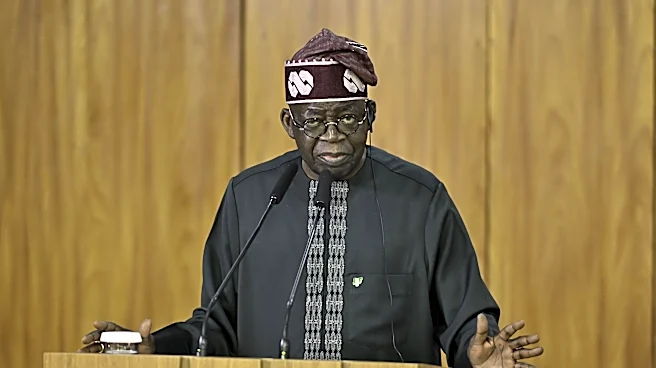
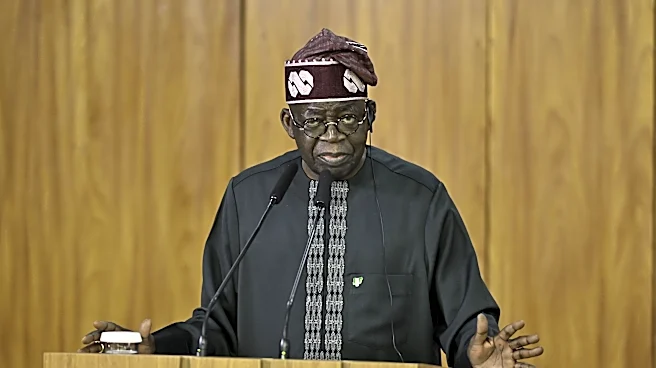
currently handle over 80% of Nigeria's foreign trade. Vice President Kashim Shettima attended the groundbreaking ceremony on November 13, where President Bola Tinubu described the Bakassi port as a 'strategic investment.' The port will feature a water depth of 20 meters, allowing it to handle large commercial vessels that often bypass Nigerian ports due to infrastructure limitations. The project also includes a 260-kilometer highway to connect the port with inland markets, facilitating cargo transport beyond the coast. Abubakar Dantsoho, Managing Director of the Nigerian Ports Authority (NPA), stated that this integrated infrastructure project will provide an additional route to international markets for landlocked countries such as Chad, Niger, Mali, and Burkina Faso.
Why It's Important?
The development of the Bakassi deepwater port is a significant step towards addressing Nigeria's long-standing challenges with port inefficiencies and high logistics costs. The current reliance on Lagos ports, coupled with deteriorating road networks, has resulted in some of the highest logistics costs in West Africa, with an estimated annual loss of $8 billion due to inefficiencies. Cargo clearance times in Lagos ports average 18 to 21 days, significantly longer than in neighboring countries like Ghana (5-7 days) and Cotonou (4 days), leading to logistics and customs charges that are approximately 30% higher. By diversifying maritime traffic and providing an alternative deepwater facility, Bakassi aims to reduce congestion, lower operational costs, and improve Nigeria's competitiveness in international trade. This project is also crucial for landlocked West African nations, offering them a new, more efficient gateway to global markets, thereby boosting regional trade and economic integration.
What's Next?
The Bakassi deepwater port project is expected to follow a public-private partnership model, with initial financing approval of $2.27 billion out of the total estimated cost of $3.5 billion. The African Export-Import Bank (Afreximbank) is serving as the mandated lead arranger and financial adviser. A dedicated project company, Bakassi Deep Seaport Limited, has been established to oversee its development. Under a shareholders' agreement ratified in February 2025, Dubai-based Arise Integrated Industrial Platforms (Arise IIP) is set to acquire an 80% stake, with the Cross River State government retaining 20%. The construction and operationalization of the port will likely proceed in phases, with continuous monitoring of its impact on trade flows and logistics costs. The success of Bakassi will be closely watched as a model for future infrastructure projects aimed at enhancing regional connectivity and economic development in West Africa.
Beyond the Headlines
The Bakassi deepwater port project transcends mere infrastructure development; it represents a strategic shift in Nigeria's economic policy to decentralize trade and foster more balanced regional growth. By reducing the over-reliance on Lagos, the project aims to unlock economic potential in other parts of the country and the wider West African sub-region. This initiative could lead to the creation of new industrial hubs, stimulate local economies, and generate employment opportunities in areas that have historically been less integrated into the national and international trade networks. Furthermore, the improved connectivity for landlocked countries could strengthen regional supply chains and foster greater economic interdependence, potentially leading to increased political stability. However, the success of this ambitious project will also depend on addressing broader systemic issues such as regulatory frameworks, security along transport corridors, and the development of skilled labor to manage and operate the new facilities efficiently. The long-term impact could redefine Nigeria's role as a regional trade and logistics powerhouse.