




What's Happening?
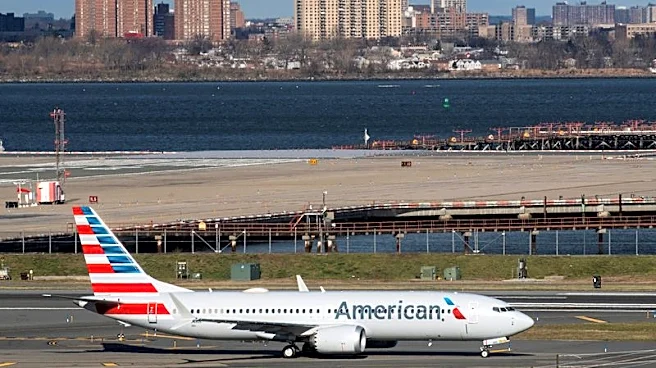
Rory Kennedy's new documentary, 'Freefall: A Reckoning for Boeing,' streaming on Netflix, continues her investigation into Boeing's manufacturing and company culture. The film, a sequel to 2022's 'Downfall: The Case Against Boeing,' examines the 2018
and 2019 737 MAX 8 crashes that killed 346 people. The documentary features claims from current and former Boeing employees, including quality managers Merle Meyers and John Barnett, who allege that the company shifted its focus to 'the pursuit of money at all costs' rather than prioritizing aircraft safety. Meyers, a quality manager from 1979 to 2023, states that the company's quality department previously had the final say on work sign-offs, a practice that allegedly changed. Barnett, a whistleblower who testified about safety issues and was featured in the previous documentary, claimed that Boeing's recruiting standards declined, with leadership ignoring concerns about inadequate training and pushing for product delivery over quality. The documentary also highlights the January 2024 Alaska Airlines flight 1282 incident, where a door plug blew off a Boeing 737 MAX 9, and the death of John Barnett in March 2024, which was ruled a suicide amidst his retaliation lawsuit against Boeing.
Why It's Important?
This documentary is important because it reignites public scrutiny on Boeing's safety protocols and corporate culture, potentially impacting the aviation industry and public trust in air travel. The allegations of prioritizing profit over safety, if widely accepted, could lead to increased regulatory oversight and demands for more stringent manufacturing standards from government bodies like the FAA. For Boeing, these claims could further damage its reputation, affect stock performance, and potentially lead to legal repercussions or increased liability in future incidents. The focus on whistleblower retaliation also highlights broader issues within corporate environments regarding employee safety concerns and ethical reporting mechanisms. The film's release on a major streaming platform ensures a wide audience, potentially influencing public perception and consumer confidence in Boeing aircraft, which could have significant economic implications for the company and its airline partners.
What's Next?
Following the release of 'Freefall,' increased public and governmental pressure on Boeing is likely. Regulatory bodies, such as the FAA, may face renewed calls to intensify their oversight and auditing of Boeing's production processes and quality control. Boeing has issued a statement acknowledging that some allegations in the film have been widely reported and that the company is working to improve under regulatory oversight. The company also mentioned new values and behaviors under its new CEO to strengthen its culture. It remains to be seen if these statements will be sufficient to address the concerns raised in the documentary. Further investigations, potential lawsuits, and calls for legislative action to enhance aviation safety standards could emerge. The documentary's impact could also influence consumer choices, potentially leading to a preference for airlines operating aircraft from other manufacturers, at least in the short term. The ongoing dialogue about corporate accountability and whistleblower protection within the aerospace industry is also expected to continue.
Beyond the Headlines
The documentary 'Freefall' delves into deeper implications beyond immediate safety concerns, touching upon the ethical responsibilities of corporations and the long-term societal impact of prioritizing financial gains over human lives. The narrative surrounding John Barnett's death, ruled a suicide, raises profound questions about the pressures faced by whistleblowers and the effectiveness of internal reporting systems like Boeing's 'Speak Up' program. The film suggests a cultural shift within Boeing, moving from an engineering-first approach to one driven by cost-cutting and production quotas, which could have systemic implications for complex manufacturing industries. This shift could lead to a broader re-evaluation of corporate governance models, emphasizing the need for independent oversight and robust ethical frameworks to prevent similar situations in other sectors. The documentary also highlights the challenge of balancing innovation and efficiency with fundamental safety principles, a tension that is increasingly relevant in rapidly evolving technological fields.