









What's Happening?
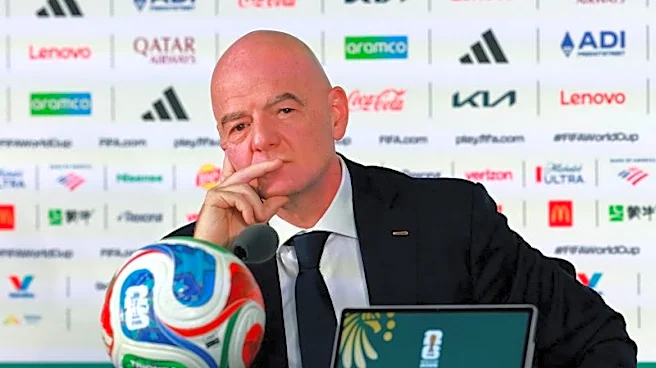
FIFA is set to propose a significant increase in funding for global football development, totaling $6.35 billion for the 2027-2030 cycle. This proposal, which will be presented at an upcoming FIFA council meeting, more than doubles the previously planned
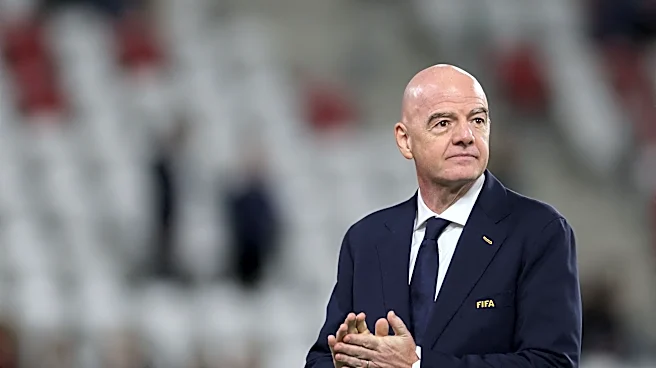
distribution funding for the period. The funds are intended to be allocated across various football entities: $25 million for each of the 211 national member associations, $99 million for each of the six continental confederations, and $8.25 million for each of the 13 zonal/regional associations. Additionally, 100 member associations will receive $1.1 million for travel and equipment solidarity. The distribution terms specify that one-third of the funds will be dedicated to women's and youth football development, another third to infrastructure with equal access for women's and youth football, and the final third to general projects. This move follows the financial success of the latest World Cup and comes amidst pressure on FIFA President Gianni Infantino after his aborted FIFA Forward Enterprise (FFE) plan.
Why It's Important?
This substantial increase in development funding by FIFA holds significant implications for the global football landscape, including potential indirect effects on U.S. soccer. By allocating considerable resources to national associations and confederations, FIFA aims to bolster the growth and infrastructure of football worldwide. The specific focus on women's and youth football development is particularly crucial, as it can lead to enhanced talent pipelines and increased participation at grassroots levels, potentially fostering future international competitors. For the U.S., which is a major player in global football and a host for upcoming international tournaments, stronger global development could mean a more competitive and engaging sport overall. The investment in infrastructure could also lead to better training facilities and playing conditions globally, raising the overall standard of the sport. This financial commitment also serves to reinforce FIFA's role as a central governing body, potentially mitigating some of the recent criticisms regarding its governance and financial transparency.
What's Next?
The proposed funding plan will first be presented to the FIFA council for approval. Following this, the detailed plan, including eligibility, application, approval, disbursement, control, and audit requirements, will be finalized by the FIFA council at its next meeting in December 2026. The ultimate approval for this $6.35 billion development fund will rest with the 77th FIFA Congress, scheduled for March 2027. In the interim, FIFA President Gianni Infantino, who is standing for re-election in March 2027, will likely use this proposal to demonstrate his commitment to global football development and address concerns raised by various confederations, including UEFA and Concacaf, who had previously called for increased financial support from FIFA's reserves. The U.S. is also a front-runner to host the inaugural Women's Club World Cup in 2028, which could further integrate it into FIFA's development plans.
Beyond the Headlines
Beyond the immediate financial implications, this substantial funding initiative could signal a strategic shift in FIFA's approach to global football governance and development. The emphasis on women's and youth football is not merely a financial allocation but reflects a broader recognition of these segments as critical for the sport's long-term sustainability and growth. This could lead to a more equitable distribution of resources and opportunities, potentially narrowing the gap between established footballing nations and emerging ones. Furthermore, by channeling funds directly to member associations and confederations, FIFA aims to empower local football bodies, fostering self-sufficiency and tailored development programs. This move could also be interpreted as an effort to consolidate support for the current FIFA leadership ahead of upcoming elections, by demonstrating tangible benefits to its member federations. The increased transparency and accountability in fund distribution will be crucial in rebuilding trust and ensuring the effective utilization of these significant resources.