



What's Happening?
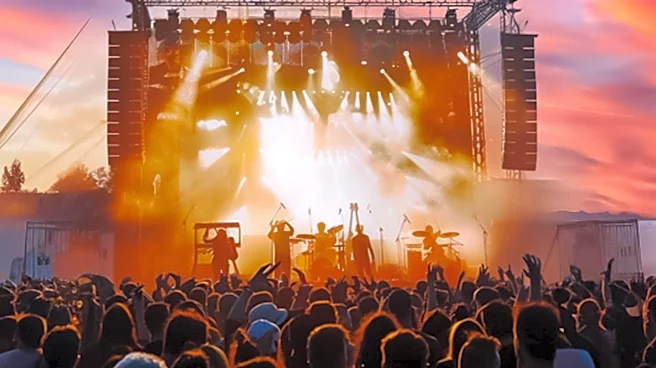
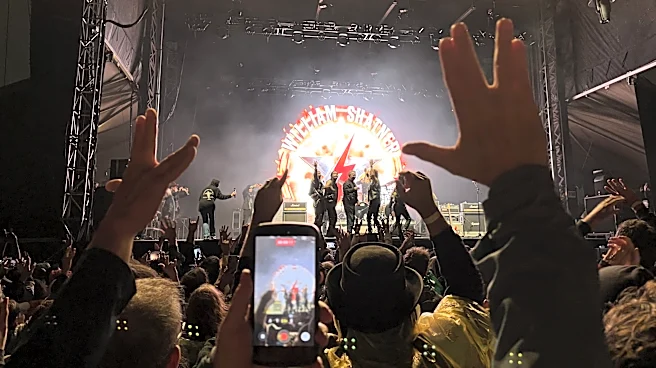
Riot Fest, a three-day music festival in Chicago, experienced severe muddy conditions due to heavy rainfall over the weekend, leading to early closures on Saturday and delayed opening on Sunday. The deluge, which brought 2 inches of rain, transformed
Douglass Park into a quagmire, impacting the experience for 50,000 daily attendees. Festival founder Mike Petryshyn has committed to restoring the park to its original state, a requirement of their contract with the Chicago Park District. The Park District will conduct walk-throughs to assess damage, and Riot Fest will be financially responsible for all reasonable restoration costs. Prior to the event, organizers had implemented preventive measures, including installing landscape fabric and ground coverings, and during the festival, crews worked to reinforce high-traffic areas and clear standing water.
Why It's Important?
The incident at Riot Fest highlights the increasing challenges faced by large outdoor events due to unpredictable weather patterns, which can have significant financial and logistical implications for organizers and local authorities. The commitment to park restoration and the financial responsibility placed on Riot Fest underscore the importance of environmental stewardship and community relations for event organizers. This situation also brings to light the ongoing debate in urban areas regarding the use of public parks for large-scale commercial events, balancing economic benefits with potential environmental impact and community access. For Chicago, a city that hosts numerous festivals, this event serves as a reminder of the need for robust contingency plans and sustainable practices to mitigate the effects of adverse weather on public spaces and ensure the long-term viability of such cultural events.
What's Next?
Riot Fest officials are currently focused on removing festival infrastructure from Douglass Park, with cleanup expected to be completed by September 29. Following this, restoration work on the grounds will commence, including soil preparation, aeration, seeding, grading, and sod replacement, with initial assessments indicating about 3 acres may require new sod. Organizers have also met with North Lawndale Ald. Monique Scott to discuss drainage and plumbing issues within Douglass Park, and further meetings with the Park District are planned to explore potential longer-term park improvements. This incident may prompt a review of existing contracts and environmental protection measures for future large-scale events in Chicago's public parks, especially given the history of community concerns regarding park damage from previous festivals.
Beyond the Headlines
The recurring issue of park damage from large festivals, as seen with Riot Fest and previously with Lollapalooza, points to a broader challenge in urban planning and event management: how to sustainably host major cultural events while preserving public green spaces. This situation raises questions about the long-term ecological impact of such events, even with restoration efforts, and the potential for cumulative damage. The financial contributions from Riot Fest for park improvements, which increased to 30% of revenue starting in 2025, reflect a growing recognition of the need for event organizers to invest significantly in the maintenance and enhancement of the public spaces they utilize. This could set a precedent for other cities and festivals, encouraging more comprehensive and proactive approaches to environmental protection and community benefit in event planning.