






What's Happening?
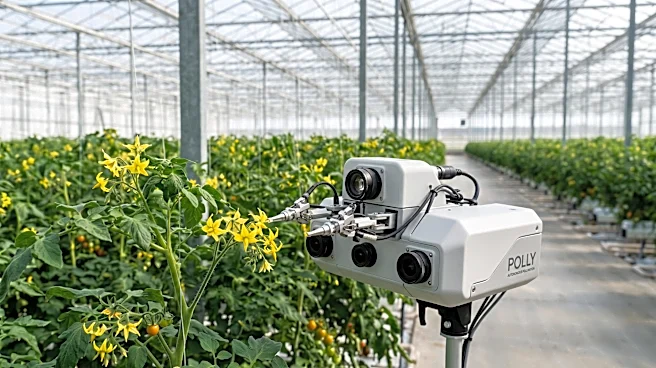
A new autonomous pollination robot named Polly has been introduced to improve tomato yields in greenhouse production. Developed through a collaboration between agricultural technology companies, Polly is designed to work alongside natural pollination methods,
specifically bumblebees, to ensure consistent pollination. The robot utilizes advanced cameras and intelligent image-recognition technology to identify tomato flowers ready for pollination. It then releases controlled bursts of air to stimulate pollen movement and encourage fruit set. This technology has undergone over five years of testing in commercial greenhouses across Europe and North America. Jorden van de Walle, Product Manager for Pollination at Biobest, stated that Polly provides an additional layer of pollination security, especially when environmental conditions limit bumblebee activity.
Why It's Important?
Pollination is a critical factor in tomato production, and environmental stressors like low light, extreme heat, or energy-saving screens can reduce pollination rates, leading to lower yields and crop quality. Polly addresses this challenge by maintaining stable pollination rates during these difficult periods, thereby maximizing yield potential and improving profitability for growers. Field trials have shown yield increases ranging from 2% to 6%, which can significantly impact large-scale commercial operations. The technology also offers flexibility, with leasing and purchase options available, making it accessible to greenhouse businesses of various sizes. This innovation helps growers overcome labor shortages and increasing production costs by improving efficiency and consistency.
What's Next?
The introduction of Polly signifies a growing trend towards automation in modern greenhouse production. As controlled-environment agriculture continues to expand, technologies that enhance reliability and productivity will gain more attention. Future developments may include further integration of autonomous systems in various aspects of greenhouse management, potentially leading to fully automated growing environments. The success of Polly could encourage more investment in robotic solutions for other crops and agricultural challenges. Growers will likely continue to explore how these technologies can complement traditional farming practices to achieve higher yields and greater sustainability.
Beyond the Headlines
The development of robotic pollinators like Polly raises broader questions about the role of technology in agriculture and its impact on natural ecosystems. While Polly is designed to complement bumblebee pollination rather than replace it, the advancement of such technologies could lead to discussions about the long-term reliance on artificial methods versus natural biological processes. This innovation highlights the increasing sophistication of agricultural technology in addressing specific challenges, but it also prompts consideration of the balance between technological intervention and ecological preservation. The ethical implications of potentially reducing the reliance on natural pollinators, even if unintended, could become a subject of future debate.