

What's Happening?
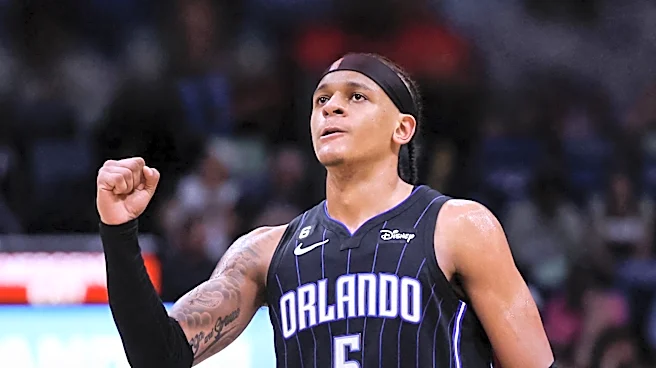
Paolo Banchero, an Orlando Magic player and the first overall pick in the 2022 NBA draft, is a founding team owner of the new Futures Basketball League (FBL). This league, set to launch in April 2027, aims to revolutionize high school basketball by providing
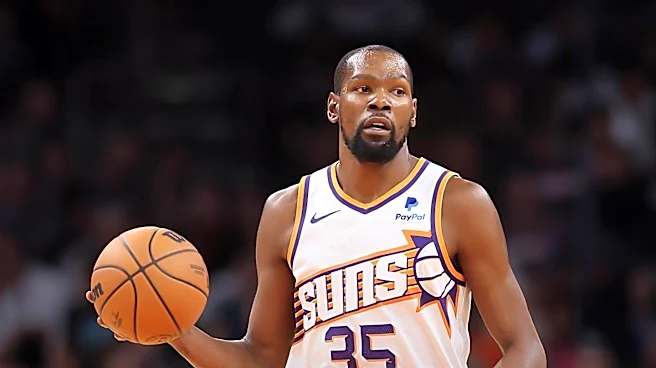
Name, Image, and Likeness (NIL) opportunities to top under-18 male prospects. The FBL plans to feature 12 teams and 120 athletes from the high school classes of 2028-2031, competing across 10 weekend events from April to August. The initiative is backed by a cohort of prominent athletes and sports investors, including LeBron James, Kevin Durant, and Derrick Rose, along with their respective business partners Maverick Carter and Richard Kleiman, and entrepreneur Gary Vaynerchuk. The league intends to offer players the option to receive part or all of their NIL pay in equity, directly challenging the traditional grassroots basketball landscape often dominated by shoe companies like Nike and Adidas.
Why It's Important?
The establishment of the Futures Basketball League signifies a significant shift in the development pipeline for elite youth basketball players in the U.S. By offering NIL compensation and equity opportunities, the FBL aims to empower young athletes financially at an earlier stage, potentially altering their career trajectories and financial literacy. This model directly competes with existing grassroots circuits, such as Nike's Elite Youth Basketball League (EYBL), which traditionally control player development without direct financial compensation to the athletes. The involvement of high-profile NBA stars like LeBron James and Kevin Durant lends considerable credibility and visibility to the FBL, attracting top talent and investor interest. This could lead to a re-evaluation of how youth sports are structured and funded, potentially forcing traditional organizations to adapt their models to retain talent. The FBL's approach could also provide a more athlete-centric pathway, allowing players greater control over their endorsements and future earnings.
What's Next?
The Futures Basketball League is scheduled to commence its first season in April 2027. Key details regarding prospect selection, specific event locations, broadcast partnerships, and the exact compensation ranges for players are yet to be announced. These forthcoming details will be crucial in determining the league's ability to attract the top recruits and establish itself as a viable alternative to existing circuits. The overlap of the FBL season with established leagues like the EYBL will create a direct competition for talent, and how both parties navigate this will shape the future of grassroots basketball. The success of the FBL could prompt other sports to explore similar athlete-led, NIL-focused development models, potentially leading to a broader transformation in youth sports across the U.S.
Beyond the Headlines
The Futures Basketball League's model raises deeper questions about the ethics and long-term implications of professionalizing youth sports at an earlier age. While NIL opportunities offer financial benefits and empowerment to young athletes, they also introduce complexities such as managing finances, navigating endorsement deals, and balancing athletic development with commercial pressures. The league's challenge will be to maintain a focus on player development and education while maximizing earning potential. This initiative could also lead to a re-evaluation of the role of shoe companies in youth sports, potentially diminishing their influence if athletes and investors continue to create independent, athlete-owned platforms. The FBL represents a cultural shift towards greater athlete agency and financial literacy, potentially setting a precedent for how future generations of athletes engage with the sports industry.