


What's Happening?
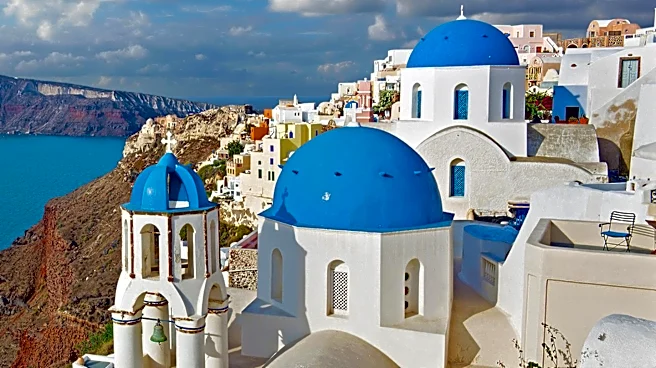
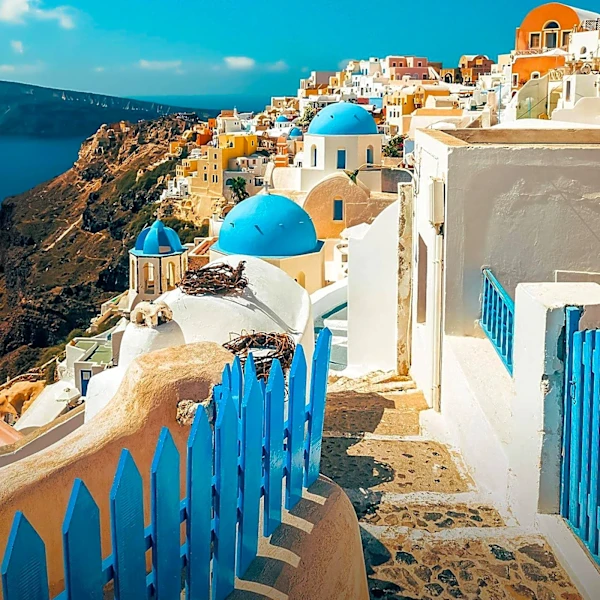
Santorini, Greece, is being highlighted for its distinctive landscape, characterized by whitewashed villages and active volcanic features. The island is a popular destination for tourists, particularly those on cruises and tours, drawn to its unique geological
formations and historical sites. Key attractions include the ancient Minoan site of Akrotiri and the caldera cliff in Fira, which offers dramatic views. The island's volcanic past has also contributed to its reputation for producing excellent wines, with notable vineyards found in areas like Pyrgos, Megalochori, and Oia. Oia, in particular, is renowned for its picturesque setting and is considered a prime location for viewing sunsets. The island offers a range of accommodations, from 4-star hotels to 5-star villas, many providing views of the caldera and amenities such as Wi-Fi, breakfast, and babysitting services.
Why It's Important?
Santorini's continued prominence as a tourist destination underscores the economic significance of its natural beauty and cultural heritage. The influx of visitors, particularly through cruise lines, directly supports the local tourism industry, including hotels, restaurants, tour operators, and local businesses. The island's unique volcanic landscape and ancient sites contribute to its global appeal, attracting a diverse range of travelers interested in history, geology, and scenic beauty. The demand for high-end accommodations and specialized tours indicates a robust luxury tourism market, which can bring substantial revenue to the local economy. Furthermore, the island's wine production, a direct result of its volcanic soil, adds another layer to its economic and cultural importance, offering unique agricultural products that attract connoisseurs and contribute to local commerce.
What's Next?
Santorini is expected to continue attracting a significant number of tourists, especially as cruise lines and tour operators maintain their itineraries to the region. The focus will likely remain on enhancing visitor experiences, potentially through further development of luxury accommodations and specialized tours that highlight the island's unique features, such as sunset cruises and wine-tasting excursions. Efforts to preserve the ancient sites, like Akrotiri, will also be crucial to maintaining the island's historical appeal. As tourism evolves, there may be increased attention on sustainable tourism practices to manage the environmental impact of high visitor numbers, ensuring the long-term preservation of Santorini's natural and cultural assets. The island's reputation as a premier destination is likely to drive ongoing investment in its tourism infrastructure.
Beyond the Headlines
The enduring popularity of Santorini reflects a broader trend in global tourism where unique natural landscapes and rich historical contexts drive destination choices. The island's volcanic origins not only create stunning visual appeal but also contribute to a distinct terroir for its wine industry, linking geology directly to economic output and cultural identity. The balance between accommodating a high volume of tourists and preserving the delicate ecosystem and historical integrity of the island presents an ongoing challenge. This dynamic highlights the complex interplay between economic development, environmental stewardship, and cultural heritage. Santorini serves as a case study for how a destination can leverage its natural and historical assets to create a thriving tourism economy while grappling with the pressures of mass appeal and the need for sustainable practices.