







What's Happening?
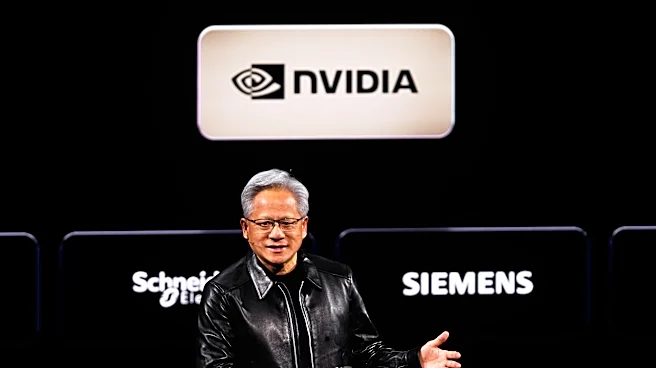
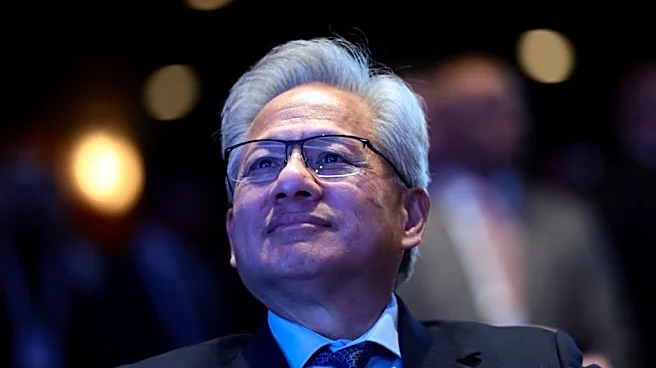
Nvidia CEO Jensen Huang resigned on Thursday following reports of extramarital affairs, including one with a suspected Chinese spy. This personnel shakeup at Nvidia, a company critical to the artificial intelligence (AI) boom due to its leading-edge computer
processors, has raised concerns in Washington, Wall Street, and Beijing. Atlantic Council experts, including Trisha Ray, Jessie Yin, and Kenton Thibaut, are analyzing the implications. Trisha Ray emphasizes that Nvidia's advanced chips are a linchpin for the United States' leverage in slowing down adversaries' AI capabilities, but this advantage is also a single point of failure if security practices are weak. Jessie Yin notes that it has become difficult for Washington to separate Nvidia from national security, suggesting an opening for Congress to increase oversight and tighten semiconductor export controls. Kenton Thibaut points to growing congressional momentum for chip restrictions, such as the AI Overwatch Act, the Chip Security Act, and the MATCH Act.
Why It's Important?
The resignation of Jensen Huang and the circumstances surrounding it have profound implications for U.S. national security, economic stability, and technological leadership. Nvidia's dominance in AI chip manufacturing makes it a strategic asset, and any security vulnerability within the company could compromise U.S. efforts to maintain its technological edge over rivals, particularly China. The incident highlights potential weaknesses in corporate security practices within critical technology sectors and underscores the need for robust government oversight. For Wall Street, the immediate impact was a slight dip in Nvidia shares, but the broader concern is the stability of the U.S. economy, which is heavily exposed to the fortunes of a few AI companies. This event could trigger a re-evaluation of how the U.S. government manages national security threats within the private sector, potentially leading to stricter regulations on company leadership and export controls.
What's Next?
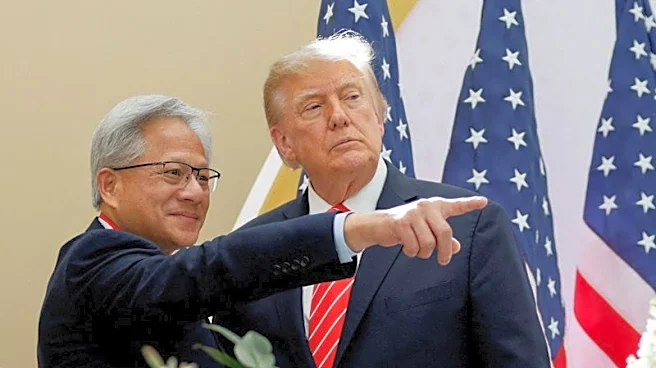
In the immediate future, the U.S. Congress is expected to exert greater oversight of Nvidia and the broader semiconductor industry. There is growing momentum for new legislation, such as the AI Overwatch Act, the Chip Security Act, and the MATCH Act, aimed at tightening chip restrictions and enhancing national security. Trisha Ray suggests that policymakers should consider direct government oversight, including security clearance-like requirements for company leadership and major customers, as well as security audits for exporting entities. For Beijing, the incident could lead to a more hawkish approach from Washington regarding technology restrictions, potentially complicating the upcoming meeting between President Trump and Chinese President Xi Jinping. However, tougher controls could also invite retaliation from Beijing, such as curbs on critical minerals or probes of other American firms.
Beyond the Headlines
The scandal surrounding Jensen Huang's resignation delves into deeper issues of corporate espionage, intellectual property theft, and the blurred lines between personal conduct and national security in the age of advanced technology. The incident exposes the vulnerability of critical industries to insider threats and foreign intelligence operations, particularly when key individuals hold immense power and access. This development could trigger a broader re-evaluation of corporate governance, executive vetting processes, and the ethical responsibilities of leaders in strategically important companies. It also highlights the ongoing technological cold war between the U.S. and China, where control over advanced semiconductors and AI capabilities is a central battleground, with implications for global economic competition and military superiority. The long-term impact could be a significant shift in how the U.S. government and private sector collaborate to protect national security interests in the tech domain.