







What's Happening?
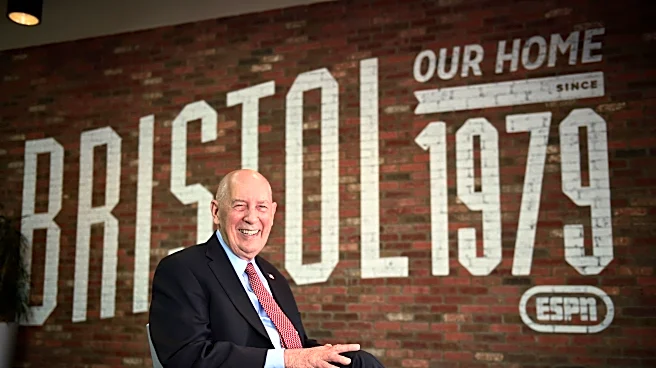
Bill Rasmussen, the visionary founder of ESPN (Entertainment and Sports Programming Network), has passed away at the age of 93 after a lengthy illness. Rasmussen's groundbreaking work in 1979 established the first 24/7 sports television channel, fundamentally
altering the landscape of sports media and television broadcasting. His innovative use of satellite television delivery allowed ESPN to launch nine months before CNN, making him a pioneer in continuous cable programming. Despite leaving ESPN in 1980, his initial concept and entrepreneurial drive, including personally funding the early stages of the company, laid the foundation for what would become a global sports media empire. Former SportsCenter anchor Bob Ley highlighted Rasmussen's enduring legacy, noting that the modern valuation of sports franchises like the Lakers is a testament to his impact.
Why It's Important?
Bill Rasmussen's contribution to U.S. television and sports culture is immense. His creation of ESPN not only revolutionized how sports content was consumed but also paved the way for the proliferation of specialized cable channels. This innovation transformed sports from a fragmented viewing experience into a continuous, accessible spectacle, significantly increasing its commercial value and cultural prominence. The model he established influenced the development of other 24/7 news and entertainment channels, demonstrating the viability of niche programming. His legacy underscores the power of entrepreneurial vision to reshape industries, creating new economic opportunities and fundamentally changing consumer habits in media consumption. The financial success of modern sports leagues and franchises can be directly linked to the broad exposure and dedicated viewership that ESPN cultivated.
What's Next?
While Rasmussen's direct involvement with ESPN ended decades ago, his foundational vision continues to influence the network's evolution. The current shift towards streaming services, such as ESPN's own $29.99-per-month app, represents the ongoing adaptation of his original concept to new technological paradigms. The challenge for ESPN and other media companies will be to maintain the spirit of continuous, accessible sports coverage while navigating the complexities of digital distribution and changing viewer preferences. Rasmussen's legacy will likely continue to be invoked as the industry grapples with balancing traditional broadcasting with the demands of the streaming era, ensuring that the 'forest of sports culture' he helped plant continues to flourish.
Beyond the Headlines
Rasmussen's story is a testament to the 'American Dream' and the impact of a single individual's vision on an entire industry. His ability to secure crucial investment from Getty Oil, despite starting with personal credit cards, highlights the blend of charm, salesmanship, and compelling ideas required for groundbreaking ventures. Beyond the business aspect, ESPN's rise fostered a shared national experience around sports, creating communal moments for millions of Americans. This cultural impact, bringing diverse communities together through shared viewership of sporting events, is a less obvious but profound aspect of his legacy. In an increasingly fragmented media landscape, the unifying power of live sports, largely amplified by ESPN, remains a significant cultural force, echoing Rasmussen's initial ambition to connect people through sports.