
What's Happening?
Chinese autonomous driving company WeRide is planning a threefold expansion of its autonomous mobility operations in the Middle East, as reported by Arabian Gulf Business Insight (AGBI). The Guangzhou-based
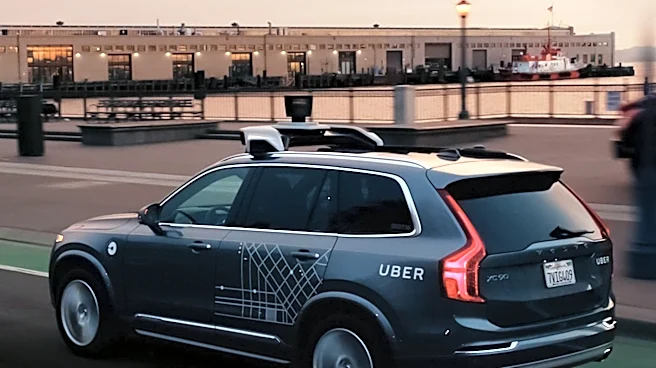
firm currently has commercial and pilot autonomous mobility deployments in the United Arab Emirates and Saudi Arabia. WeRide holds a federal-level autonomous driving license in the UAE and has secured operational permits in Saudi Arabia. In the UAE, the company has expanded its driverless vehicle presence in Abu Dhabi and Dubai, partnering with Uber to offer commercial robotaxi services. Beyond passenger vehicles, WeRide has also introduced autonomous buses and specialized vehicles into regional transit and commercial projects. This expansion in the Middle East is a key component of WeRide's international growth strategy, which emphasizes an asset-light operational framework through collaborations with local transport operators and platform partners to increase fleet sizes in major regional metropolitan centers.
Why It's Important?
This expansion signifies a growing trend in the global autonomous vehicle market, with a particular focus on the Middle East as a key region for development and deployment. WeRide's strategy of partnering with established ride-hailing platforms like Uber and local transport operators could set a precedent for how autonomous vehicle companies scale their operations internationally. For the U.S. autonomous driving industry, this move highlights the competitive landscape and the importance of securing international markets for growth. The success or challenges faced by WeRide in the Middle East could offer valuable insights into regulatory frameworks, public acceptance, and operational models for autonomous vehicles, potentially influencing strategies for U.S. companies looking to expand globally or even within the U.S. market. The asset-light approach could also become a model for efficient scaling in a capital-intensive industry.
What's Next?
WeRide is expected to continue its collaborations with local transport operators and platform partners in the Middle East to achieve its threefold expansion target. This will likely involve further deployment of robotaxis, autonomous buses, and specialized vehicles in key metropolitan areas across the UAE and Saudi Arabia. The company will focus on scaling its fleet sizes and integrating its autonomous driving technology into existing transportation networks. Future developments may include expanding into other Middle Eastern countries or introducing new autonomous vehicle applications. The success of this expansion could lead to increased investment in autonomous driving technology in the region and potentially influence regulatory developments for self-driving vehicles in other parts of the world.
Beyond the Headlines
The expansion of autonomous mobility services in the Middle East by companies like WeRide has broader implications beyond just transportation. It represents a significant step towards smart city initiatives and the integration of advanced technology into urban infrastructure. The adoption of autonomous vehicles can lead to reduced traffic congestion, lower emissions, and improved road safety, contributing to sustainable urban development. However, it also raises questions about job displacement for traditional drivers and the need for new regulatory frameworks to ensure safety and liability. The collaboration with Uber suggests a future where autonomous vehicles are seamlessly integrated into existing ride-hailing ecosystems, potentially transforming urban mobility and consumer expectations for transportation services globally.