




What's Happening?
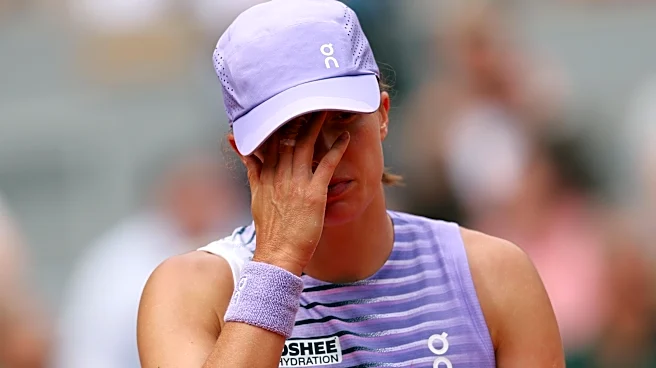
Tennis champion Iga Swiatek recently discussed the pressures of elite sports, her mental approach to competition, and her experiences at the Paris Olympics. In a conversation with Mikaela Shiffrin, Swiatek detailed the evolution of her time as world No.
1, initially feeling the need to prove herself, then competing with a target on her back in 2023, and finally finding more joy in her position by 2024. She described her semifinal defeat at the Paris Olympics as the 'biggest drama' of her career, highlighting the challenge of competing for a bronze medal the following day while still processing the disappointment. Swiatek also touched upon distinguishing between technical slumps and mental blocks, emphasizing the ongoing nature of mental performance work. Her traveling sports psychologist, Daria, has been instrumental in helping her develop resting skills, with a ukulele symbolizing her time away from tennis demands. Swiatek's father, Olympic rower Tomasz Swiatek, encouraged her to pursue an individual sport, and her sister, Agata, provided early lessons in professionalism. Rafael Nadal's playing style also served as an inspiration.
Why It's Important?
Swiatek's candid reflections offer significant insights into the psychological demands placed on top athletes, particularly in individual sports. Her discussion on managing expectations, coping with high-stakes losses, and the continuous effort required for mental well-being resonates beyond the tennis court, providing a valuable perspective for athletes across various disciplines. The emphasis on mental health support, exemplified by her work with a sports psychologist, underscores the growing recognition of its critical role in athletic performance and overall well-being. Her journey from a 19-year-old Roland Garros champion to a seasoned world No. 1 illustrates the multifaceted challenges of sustaining success and adapting to the pressures that come with it. Furthermore, her foundation's goal to support young Polish athletes highlights a commitment to fostering the next generation, sharing the knowledge and support that she herself benefited from, thereby contributing to the broader development of sports talent.
What's Next?
Swiatek is expected to continue her career at the highest level, applying the lessons learned about pressure management and mental resilience. Her ongoing work with her sports psychologist suggests a continued focus on maintaining mental well-being as a core component of her training and competition strategy. Through her foundation, she will likely continue to expand her efforts in supporting young Polish athletes, potentially influencing how future generations approach their careers both technically and mentally. Her experiences, particularly her Olympic performance, will likely inform her preparation for future major tournaments, as she seeks to refine her ability to perform under immense pressure and recover from setbacks. The insights shared in her conversation with Mikaela Shiffrin may also inspire broader discussions within the sports community about athlete welfare and the importance of holistic development.
Beyond the Headlines
Beyond her immediate competitive future, Swiatek's openness about her struggles and mental processes contributes to a larger cultural shift in sports, destigmatizing mental health challenges among elite athletes. Her willingness to share her vulnerabilities, such as the 'biggest drama' of her Olympic semifinal defeat, helps normalize these experiences for both fellow athletes and the general public. This transparency can encourage more athletes to seek psychological support and foster a more empathetic understanding of the pressures they face. Her foundation's work also points to a long-term impact on sports development, potentially shaping how athletic federations and support systems are structured to better nurture young talent. The influence of her family, particularly her father's encouragement for an individual sport and her sister's early lessons, highlights the foundational role of personal support systems in an athlete's journey, extending beyond just coaching and technical training.