





What's Happening?
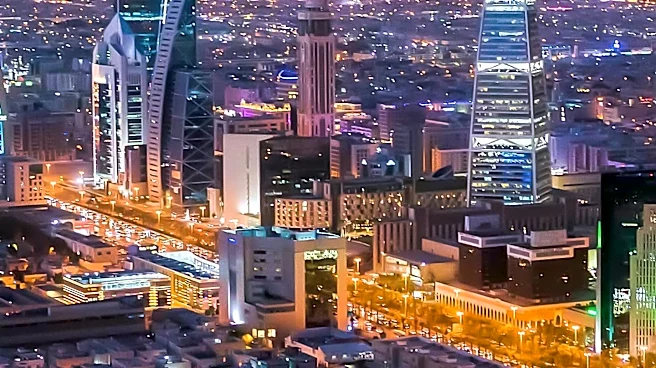
Saudi Arabia is increasingly positioning itself as a global hub for critical minerals, a strategic move to diversify its economy away from oil, according to S&P Global. The Saudi government estimates its mineral resources to be worth approximately US$2.5
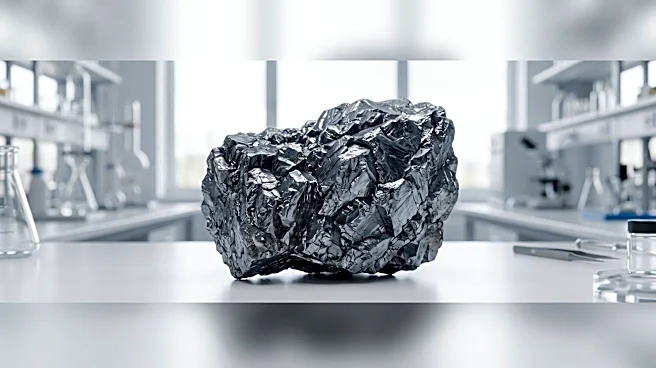
trillion, a significant increase from its 2016 estimate of US$1.31 trillion. This upward revision is attributed to newly identified rare earth elements (REEs), energy transition metals, and increased estimates for phosphate, copper, zinc, and gold resources. In September, the Kingdom reported the identification of 110 million tonnes of raw material containing REEs and uranium. This initiative is part of Saudi Vision 2030, which aims to boost the mining sector's contribution to the gross domestic product to 240 billion Saudi riyals (US$91 billion), create 200,000 jobs, and attract US$27 billion in new investments by 2030. To support these goals, Riyadh has implemented policy reforms, including lower mining taxes and streamlined permitting processes.
Why It's Important?
The emergence of Saudi Arabia as a critical minerals hub holds significant implications for global supply chains and the energy transition. As the world increasingly shifts towards renewable energy and electric vehicles, the demand for critical minerals like copper, REEs, and lithium is soaring. Saudi Arabia's substantial reserves and strategic investments could provide a more stable and diversified source for these essential materials, potentially reducing reliance on a few dominant suppliers. This development could also attract considerable foreign investment into the Kingdom's mining and processing sectors, fostering technological advancements and job creation. For the U.S. and other nations, a diversified supply of critical minerals from a geopolitically stable partner like Saudi Arabia could enhance national security and economic resilience by mitigating risks associated with concentrated supply chains.
What's Next?
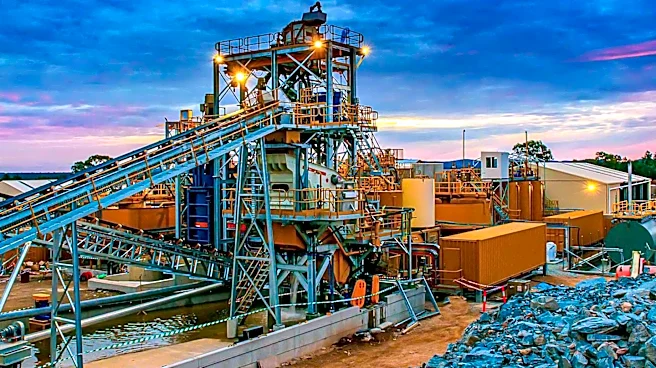
Saudi Arabia is expected to continue its aggressive investment in mineral exploration and processing capabilities. S&P Global Market Intelligence data indicates a nearly sevenfold increase in Saudi Arabia's mine site exploration budget since 2022, reaching US$146 million in 2025, with a focus on gold and copper. State-owned entities like Maaden and Manara Minerals Investment Company are playing central roles, with Manara focusing on securing minerals vital for defense, advanced manufacturing, and the energy transition. Saudi Aramco is also exploring lithium extraction from oilfield brines, with a potential US$2 billion joint venture with Maaden aiming for commercial production by 2027. Foreign companies, including Vedanta Copper International, Zijin Mining Group, and Hastings Technology Metals, have outlined significant investment plans for processing and refining facilities in the Kingdom. These efforts are expected to extend downstream into battery materials and electric vehicle manufacturing, with projects like Ceer National Automotive Company and Lucid Motors' production facility in King Abdullah Economic City.
Beyond the Headlines
While Saudi Arabia's ambition to become a critical minerals hub presents significant opportunities, challenges remain. Water scarcity is a major environmental concern, particularly for water-intensive mineral processing operations. The relatively underexplored Arabian Shield also poses geological and technical risks, as increased exploration spending does not guarantee commercially viable discoveries. Infrastructure gaps, workforce shortages, and logistical constraints could also impede progress. Addressing these issues will require substantial further investment in desalination facilities, transport networks, and electricity infrastructure. The long-term success of this diversification strategy will depend on the Kingdom's ability to overcome these hurdles and establish a robust, integrated supply chain that can compete effectively on a global scale, while also navigating the complex environmental and social implications of large-scale mining.