







What's Happening?
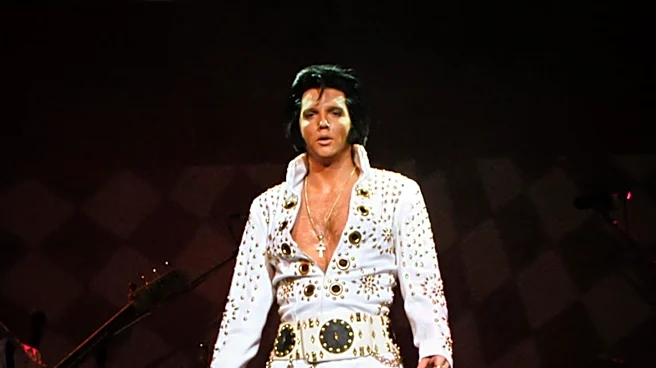
On September 9, 1956, Elvis Presley made his first appearance on The Ed Sullivan Show, attracting approximately 60 million viewers. This significant event in television history occurred without Ed Sullivan himself being present in the studio to introduce
Presley, nor was Presley in the program's New York studio. Prior to this, Presley had already performed on other popular shows such as the Dorsey brothers’ Stage Show, The Milton Berle Show, and The Steve Allen Show. Ed Sullivan had initially been hesitant to book Presley due to criticism regarding his dancing style. However, Sullivan reconsidered his stance after Presley's July 1, 1956, appearance on The Steve Allen Show led to Allen surpassing Sullivan in the ratings. Following this, Sullivan and Presley's manager, Colonel Tom Parker, reached an agreement for three appearances, with a reported payment of $50,000.
Why It's Important?
Elvis Presley's debut on The Ed Sullivan Show was a pivotal moment in American popular culture and the music industry. The massive viewership of 60 million people underscored Presley's burgeoning star power and solidified his status as a national phenomenon. This appearance significantly broadened his audience, exposing his unique musical style and performance to a mainstream American public that might not have otherwise encountered him. The initial reluctance of Ed Sullivan, a prominent television personality, to feature Presley highlights the cultural anxieties and generational divides of the era regarding rock and roll music and its performers. Ultimately, the show's decision to book Presley, driven by competitive ratings, demonstrated the growing commercial influence of youth culture and its impact on entertainment programming. This event helped to cement television's role as a powerful medium for launching and amplifying musical careers, setting a precedent for future artists.
What's Next?
While the event itself is historical, its legacy continues to influence how new artists are introduced to mass audiences and the role of television in shaping cultural trends. The precedent set by Elvis Presley's Ed Sullivan Show appearances demonstrated the immense power of national television broadcasts to create superstars and cultural icons. Future artists and their management would continue to leverage such platforms for widespread exposure. The show's initial hesitation and subsequent embrace of Presley also illustrate the ongoing dynamic between established media gatekeepers and emerging cultural phenomena, a pattern that continues to play out with new forms of media and entertainment. The impact of this single broadcast on Presley's career trajectory and the broader landscape of American entertainment remains a subject of study and appreciation.
Beyond the Headlines
The cultural impact of Elvis Presley's Ed Sullivan Show debut extends beyond mere viewership numbers; it represents a significant shift in American societal norms and the mainstream acceptance of rock and roll. The controversy surrounding Presley's dancing, which led to his being filmed from the waist up in subsequent appearances, reflects a broader moral panic among conservative segments of society regarding youth culture and perceived indecency. This tension between artistic expression and societal expectations became a recurring theme in American entertainment for decades. The event also highlighted the commercialization of popular culture, as the pursuit of ratings ultimately trumped initial moral reservations. Presley's performance on such a widely viewed platform helped to normalize rock and roll, paving the way for countless artists and fundamentally altering the sound and style of American music. It underscored the power of mass media to both reflect and shape cultural values.