

What's Happening?
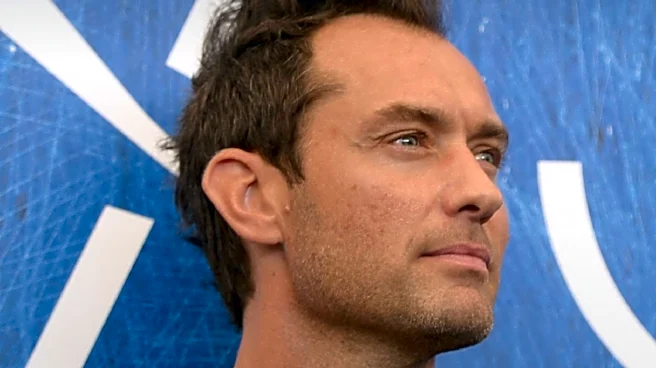
Jude Law initially turned down the role of Dickie Greenleaf in the film 'The Talented Mr. Ripley' three times, a decision influenced by an agent who advised against taking such a role to avoid being typecast. Law recounted to Vanity Fair that he was told
the role would 'box him in.' Despite his initial reluctance and telling director Anthony Minghella he was unsure about the part, Law eventually accepted it. His portrayal of Greenleaf not only earned him an Oscar nomination but also cemented his status as a Hollywood star and an enduring style icon. The film's wardrobe, overseen by Oscar-winning costume designer Ann Roth and assistant Gary Jones, has been widely praised and continues to influence fashion trends 25 years later. The character's collection of soft tailoring, pleated shorts, linen trousers, loafers, and mesh knit polos has proven resistant to fleeting modern trends.
Why It's Important?
Jude Law's initial hesitation and eventual acceptance of the role in 'The Talented Mr. Ripley' highlight the significant impact that career choices, and the advice of agents, can have on an actor's trajectory and public image. The film's lasting influence on male fashion, particularly its depiction of effortless summer style, demonstrates how cinematic costume design can transcend its original context to become a timeless source of inspiration. This cultural impact extends beyond the entertainment industry, influencing fashion brands and consumer trends. The story also underscores the potential for roles initially perceived as limiting to instead become career-defining moments, offering valuable lessons for emerging talent in Hollywood about trusting artistic vision over conventional career advice. The film's enduring legacy as a style touchstone continues to shape perceptions of elegance and leisure, particularly in the realm of menswear.
What's Next?
The continued discussion and dissection of 'The Talented Mr. Ripley's' style, even 25 years after its release, suggests its ongoing relevance in fashion and popular culture. This enduring appeal could lead to renewed interest in the film itself, potentially driving viewership on streaming platforms or inspiring new fashion collections that draw from its aesthetic. For Jude Law, the role remains a significant part of his legacy, influencing how his career is viewed and potentially opening doors for future projects that leverage his established image as a sophisticated and stylish actor. The film's influence may also inspire other costume designers and filmmakers to create wardrobes with similar timeless appeal, aiming for a lasting cultural impact beyond immediate trends. The ongoing appreciation for the film's aesthetic could also lead to retrospective articles, documentaries, or exhibitions celebrating its contribution to film and fashion.
Beyond the Headlines
The narrative surrounding Jude Law's role in 'The Talented Mr. Ripley' delves into deeper themes of identity, aspiration, and the transformative power of appearance. The film uses clothing not merely as adornment but as a crucial tool to illustrate protagonist Tom Ripley's discomfort and eventual assimilation into Dickie Greenleaf's privileged world. This highlights the psychological and social dimensions of fashion, where attire can signify status, ambition, and even deception. The contrast between Greenleaf's light, loose tailoring and Ripley's padded, boxy suits subtly communicates their differing social standings and internal states. This nuanced approach to costume design elevates it beyond mere aesthetics, making it an integral part of the storytelling. The film's enduring appeal as a style guide speaks to a universal desire for elegance and a certain aspirational lifestyle, reflecting how cultural products can shape our understanding of self and social mobility.