








What's Happening?
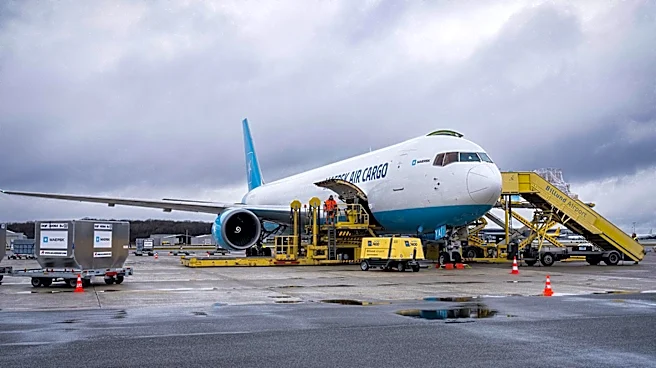
Air cargo executives are expressing growing concern over the lack of a suitable replacement for the Boeing 767 freighters, which constitute a substantial portion of the midsize cargo aircraft fleet. At the Cargo Facts Symposium in Nashville, industry
leaders called upon Airbus, Boeing, and conversion shops to prioritize the development of a new midsize freighter. Many executives view a dedicated Boeing 787 freighter or a passenger-to-cargo conversion of the 787 as the most logical solution, though there is also interest in a cargo variant of Airbus’s A330neo. LATAM Cargo Group chief executive Andres Bianchi stated that the current 767Fs, which LATAM heavily relies on, cannot sustain operations into the second half of the 2030s. Boeing continues to assemble 767s, but its backlog is dwindling, and production is expected to halt soon. Both Airbus and Boeing are currently focused on developing much larger widebody freighters, such as Boeing's 777-8F and Airbus's A350F, which are several years away from service entry or certification.
Why It's Important?
The impending obsolescence of the Boeing 767 freighter fleet poses a significant challenge to the global air cargo industry, particularly for medium-haul, medium-demand routes where the 767F's 50-ton payload capacity is ideal. The absence of a direct, new-generation replacement could lead to operational inefficiencies, increased costs, and potential disruptions in supply chains. This situation highlights a critical gap in aircraft manufacturing strategies, as major manufacturers have largely prioritized larger widebody freighters. The call from air cargo executives for a new midsize option underscores the economic necessity of such an aircraft for maintaining efficient global logistics. The development of a 787 freighter, either new-build or converted, would require significant investment and collaboration between Boeing and conversion specialists, potentially creating new market opportunities for aerospace companies and impacting the competitive landscape of the freighter market.
What's Next?
The immediate next steps involve continued discussions and potential collaborations between air cargo operators, Boeing, Airbus, and aircraft conversion companies. Boeing has acknowledged that the 787 is a natural area to explore for future medium-widebody freighter options and is evaluating its choices while listening to customer feedback. Conversion firms like Air Transport Services Group and Israel Aerospace Industries have expressed strong interest in a 787 passenger-to-freighter conversion, with some executives emphasizing the need for OEM partnership due to the 787's complex composite fuselage and advanced systems. However, such projects typically take years to materialize. Additionally, high demand for passenger-configured 787s means that a sufficient supply of second-hand aircraft for widespread conversions is not yet available. Boeing is also expected to end 767F production in 2027, further intensifying the urgency for a replacement solution.
Beyond the Headlines
The dilemma surrounding the replacement of the Boeing 767 freighters reveals deeper implications for the future of air cargo and aerospace manufacturing. The focus of major manufacturers on larger freighters suggests a potential misjudgment of market needs for midsize capacity, or a strategic decision to concentrate resources on higher-margin, larger aircraft. This could lead to a fragmented market where specialized conversion companies play an increasingly vital role in filling niche demands. The technical challenges of converting advanced aircraft like the 787, with its composite materials and integrated systems, highlight the evolving complexity of aircraft engineering and the necessity for close collaboration between OEMs and conversion specialists. This situation could also spur innovation in aircraft design and materials, as the industry seeks more efficient and adaptable solutions for diverse cargo requirements, ultimately influencing long-term investment in aerospace research and development.