








What's Happening?
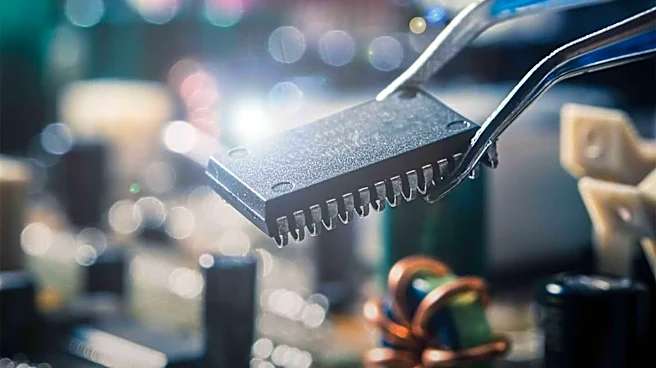
Texas Instruments Incorporated, headquartered in Dallas, Texas, continues to be a dominant force in the semiconductor industry, specializing in the design, manufacturing, and sale of analog and embedded processing chips. These chips are integral to a wide
array of electronics, from automotive systems and industrial machinery to medical devices and communication equipment. While the company is recognized by consumers for its graphing calculators, the majority of its revenue is generated from supplying semiconductors to other manufacturers. Founded in 1930 as Geophysical Service Inc., Texas Instruments pioneered the commercial silicon transistor in 1954 and the integrated circuit in 1958, a foundational invention for modern electronics. The company operates through three main segments: Analog, Embedded Processing, and a smaller 'Other' segment that includes its Digital Light Processing (DLP) technology and calculator business. With approximately 33,000 employees and a portfolio of over 80,000 products, Texas Instruments serves more than 100,000 customers globally, with a significant focus on industrial and automotive applications.
Why It's Important?
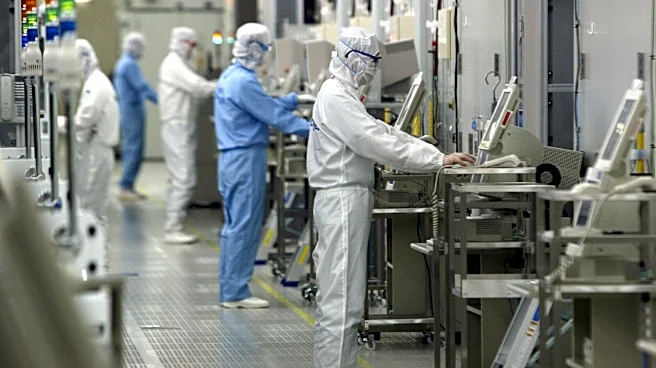
Texas Instruments' strong market position as the world's largest producer of analog chips is crucial for various U.S. industries. Its extensive customer base and broad product range reduce reliance on any single market, providing a degree of stability in the often-volatile semiconductor industry. The company's in-house manufacturing strategy is highlighted as a competitive advantage, ensuring reliability and supply security, which is particularly vital for critical sectors like automotive and industrial manufacturing that depend on long-lived chips. This approach helps mitigate supply chain disruptions, a significant concern in recent years. Furthermore, Texas Instruments' disciplined capital allocation and focus on growing free cash flow per share make it an attractive investment, with a history of returning cash to shareholders through dividends and share repurchases. Its emphasis on industrial and automotive end markets, which have longer product lifecycles, provides a more stable financial profile compared to companies heavily reliant on consumer electronics.
What's Next?
The semiconductor industry faces inherent cyclical demand tied to macroeconomic conditions, and Texas Instruments will continue to navigate these fluctuations, particularly in its key industrial and automotive markets. The company's global presence means it will also be influenced by international trade dynamics and regulatory changes. Significant capital investment will be required for building and expanding fabrication facilities to support long-term growth, which could impact near-term profitability. Competition in both analog and embedded processing segments remains a constant factor, and technological shifts could alter demand for specific products. Investors and industry observers will closely monitor the company's ability to manage these risks while maintaining its leadership in analog semiconductors and its disciplined financial strategy. The ongoing evolution of trade and macro conditions will be key factors in the company's future performance.
Beyond the Headlines
Texas Instruments' historical contributions, such as the invention of the integrated circuit, underscore its profound impact on the technological landscape. This innovation laid the groundwork for virtually all modern electronics, shaping the digital age. The company's strategic focus on in-house manufacturing, unlike many competitors who outsource production, highlights a broader industry debate about supply chain resilience and national security, especially in critical technology sectors. This approach not only offers greater control over quality and supply but also contributes to domestic manufacturing capabilities. The long product lifecycles of chips used in industrial and automotive applications also reflect a shift towards more sustainable and durable technology solutions, contrasting with the rapid obsolescence often seen in consumer electronics. Texas Instruments' enduring presence and continuous innovation are indicative of the foundational role semiconductor companies play in driving economic growth and technological advancement.