




What's Happening?
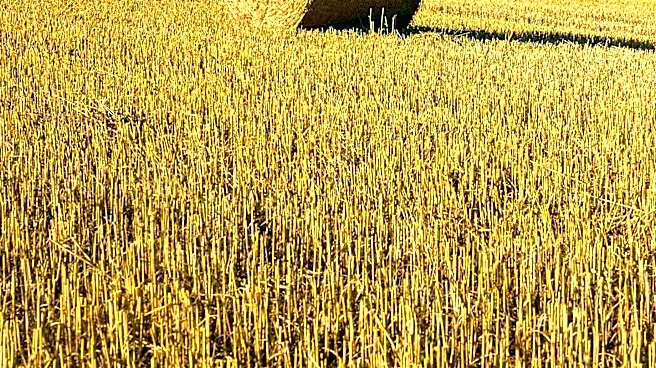
Hay markets in the Western U.S., specifically in the Washington-Oregon Columbia Basin, Oregon, Idaho, and California, are experiencing firmness across all grades of hay and straw. This stability comes despite recent rain showers that slowed trading in some
areas and reports of defects in 2nd cutting Timothy hay unsuitable for export markets. Trade sources remain bullish, even as a major hay exporter in the Columbia Basin recently filed for bankruptcy and was subsequently sold to an Idaho-based forage company. Demand for hay is generally moderate to good, though rancher buying of feeder hay has slowed in Oregon due to decreased movement caused by recent rainstorms and high fuel prices. Significant portions of Oregon and Idaho are experiencing moderate to exceptional drought conditions, impacting hay production and supply.
Why It's Important?
The conditions in the Western U.S. hay markets have direct implications for the livestock industry and agricultural economy. Firm hay prices, coupled with drought conditions, mean higher input costs for ranchers and dairy farmers, potentially impacting their profitability and the overall cost of meat and dairy products for consumers. The challenges in export markets, such as the defects in Timothy hay, can affect the revenue of hay producers and exporters, leading to shifts in trade patterns and potentially increasing domestic supply. The sale of a bankrupt exporter to another forage company indicates consolidation within the industry, which could alter market dynamics and competition. Furthermore, the widespread drought in key hay-producing regions underscores the vulnerability of agricultural markets to climate conditions, highlighting the need for resilient farming practices and water management strategies.
What's Next?
Hay market reports will continue to be issued biweekly, providing ongoing updates on prices, demand, and supply. The impact of persistent drought conditions in Oregon and Idaho will likely remain a critical factor influencing hay availability and pricing. Ranchers and farmers will continue to monitor fuel prices, which affect transportation costs and overall movement of hay. The industry will also be watching for developments in export markets and how producers adapt to quality challenges. The consolidation within the hay export sector, following the bankruptcy and sale of a major player, could lead to adjustments in market strategies and supply chain efficiencies. Stakeholders will be looking for signs of how these factors will balance out to determine future price stability and supply security.
Beyond the Headlines
The current state of the hay markets in the Western U.S. reflects broader environmental and economic pressures on the agricultural sector. The severe drought conditions highlight the increasing frequency and intensity of climate-related challenges faced by farmers, necessitating long-term adaptation strategies such as drought-resistant crops, improved irrigation techniques, and water conservation policies. The interplay between fuel prices, transportation costs, and market demand also underscores the complex economic web that underpins agricultural supply chains. The resilience of the hay market, despite these challenges, points to the essential nature of this commodity for the livestock industry. This situation could accelerate the adoption of more sustainable and efficient agricultural practices, as producers seek to mitigate risks and ensure consistent supply in an increasingly unpredictable environment.