







What's Happening?
Marathon Petroleum (MPC), the largest U.S. oil refiner, announced a significant increase in its third-quarter profits, driven by exceptionally high refining margins. The company reported a net income of $7.4 billion, a substantial rise from $1.4 billion in the same
period last year. Adjusted earnings per share reached $26.93, surpassing Wall Street expectations. This surge in profitability is attributed to a refining and marketing margin that jumped to $45.70 per barrel, up from $17.60 a year prior, largely due to global fuel supply disruptions from the Middle East and Russia. Marathon Petroleum operated its refineries at 100% crude capacity utilization, processing 3.2 million barrels per day. Concurrently, the company entered into a $4.2 billion agreement to sell its St. Paul Park refinery in Minnesota and Mandan refinery in North Dakota, along with associated infrastructure, to CVR Energy. This divestiture involves Marathon receiving $3.45 billion and its midstream subsidiary MPLX collecting an additional $750 million. The proceeds from this sale are intended to support investments primarily along the U.S. Gulf Coast.
Why It's Important?
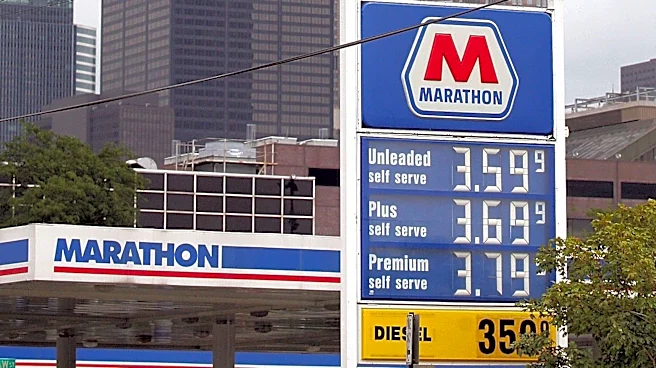
The dramatic increase in Marathon Petroleum's profits highlights the current robust state of the U.S. refining industry, benefiting from global energy market dislocations. The surge in refining margins indicates a tight supply of refined products, which translates into higher prices for consumers at the pump and increased profitability for refiners. This situation underscores the sensitivity of the U.S. energy sector to international geopolitical events and supply chain disruptions. The strategic sale of two refineries to CVR Energy signifies Marathon Petroleum's ongoing portfolio optimization, focusing on higher-value assets and regions like the Gulf Coast. This move could lead to a more streamlined and efficient operational footprint for MPC, potentially enhancing long-term shareholder value. For CVR Energy, the acquisition expands its refining capacity and market presence. The deal also involves Trafigura becoming the exclusive crude supplier to the acquired refineries, indicating a significant shift in supply chain dynamics for these facilities and further consolidating relationships within the energy trading sector.
What's Next?
Following the strong third-quarter performance, Marathon Petroleum has increased its quarterly dividend by 10% and expanded its share buyback authorization to $8.1 billion, signaling continued confidence in its financial health and a commitment to returning capital to shareholders. The sale of the St. Paul Park and Mandan refineries is expected to close, with the proceeds being directed towards strategic investments, particularly in the U.S. Gulf Coast. This suggests a potential for further modernization or expansion of MPC's remaining refining assets in that region. The market will closely monitor fourth-quarter refining margins, as their sustainability is crucial for maintaining the current level of profitability. Analysts will also be watching how the company redeploys the proceeds from the refinery sale and its impact on future earnings and operational efficiency. The broader refining industry will continue to be influenced by global crude supply and demand dynamics, as well as geopolitical stability, which could either sustain or diminish the current high refining margins.
Beyond the Headlines
The exceptional profitability experienced by Marathon Petroleum and the broader refining industry raises questions about energy security and consumer impact. While refiners benefit from high margins, consumers face elevated fuel prices, which can contribute to inflationary pressures across the economy. The strategic divestment of refineries by MPC and the subsequent investment focus on the Gulf Coast could indicate a long-term shift in refining infrastructure, potentially concentrating more capacity in regions with better access to crude supplies and export markets. This could have implications for regional fuel supply stability and pricing in areas where refineries are being sold. Furthermore, the deal highlights the ongoing consolidation and strategic realignments within the U.S. energy sector, as companies adapt to evolving market conditions, environmental regulations, and shareholder demands for capital returns. The involvement of commodity trading giants like Trafigura in securing crude supply for the acquired refineries also underscores the increasing integration between physical asset ownership and global commodity trading networks.