


What's Happening?
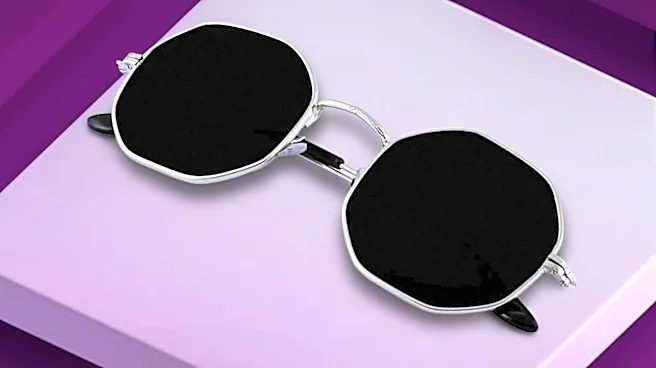
Vicci Eyewear has incorporated a virtual try-on tool into its offerings, allowing customers to instantly visualize how their eyewear frames, such as those from the Privé Collection (Lucia RX and Lucia models), would look on them. This tool is accessible
via a phone or computer, providing a convenient way for consumers to experience the frames before purchase. The Privé Collection features bold frames made from Italian acetate, available in four colors, with options for prescription or non-prescription lenses that include scratch-resistant, anti-reflective, and UV-protective coatings. This virtual try-on capability is part of Vicci Eyewear's strategy to enhance the online shopping experience for its limited-edition collections.
Why It's Important?
The integration of virtual try-on technology by Vicci Eyewear is significant for the U.S. retail sector, particularly in the eyewear market. It addresses a key challenge in online shopping: the inability to physically try on products. By offering an instant visualization tool, Vicci Eyewear can boost consumer confidence in online purchases, potentially leading to higher conversion rates and reduced returns. This technology enhances accessibility for customers who may not have physical access to stores or prefer the convenience of online shopping. For the eyewear industry, this innovation sets a precedent for customer engagement, pushing other brands to adopt similar solutions to remain competitive. It also highlights the growing trend of leveraging augmented reality (AR) and artificial intelligence (AI) to bridge the gap between digital and physical retail experiences, making online shopping more interactive and personalized.
What's Next?
The success of Vicci Eyewear's virtual try-on tool is likely to encourage broader adoption of similar technologies across the eyewear and fashion industries. We can expect to see more sophisticated virtual try-on experiences, potentially incorporating advanced AR features like real-time facial tracking and personalized recommendations based on face shape or style preferences. The technology may also expand beyond static images to include video try-ons, offering a more dynamic view of how frames look from different angles and in various lighting conditions. Retailers might integrate these tools directly into their e-commerce platforms and mobile applications, making the shopping journey even more seamless. Furthermore, data collected from virtual try-on interactions could provide valuable insights into consumer preferences, informing future product development and marketing strategies.
Beyond the Headlines
The widespread adoption of virtual try-on tools like Vicci Eyewear's could have profound implications for consumer behavior and the retail landscape. It could lead to a greater reliance on digital visualization for purchasing decisions, potentially diminishing the need for physical showrooms or in-person consultations. This shift might also influence product design, with brands creating eyewear specifically optimized for virtual try-on experiences. On an ethical level, the technology raises questions about data privacy, particularly concerning facial scans and personal appearance data. Ensuring secure handling and transparent usage policies will be crucial for consumer trust. Culturally, it could normalize the idea of 'trying on' items virtually before any physical interaction, fundamentally changing how consumers approach shopping for personal accessories and fashion items, and further accelerating the digital transformation of retail.