






What's Happening?
The Food and Agriculture Organization of the United Nations (FAO) reported a 1.2% fall in its Food Price Index for October, settling at an average of 133.9 points. This decline was primarily driven by weakening international import demand and reduced
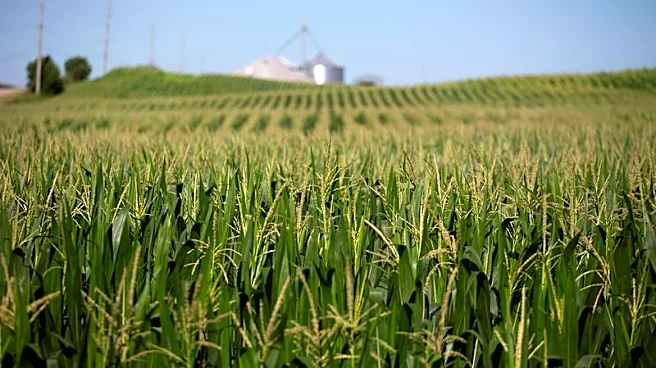
quotations for cereals, dairy products, and meat. Cereals experienced the sharpest drop, falling 4.5% from September. Wheat prices retreated after four consecutive months of gains due to weak international demand, improved production prospects, and expectations of eased export restrictions in the Black Sea region. Maize prices also decreased, influenced by the harvest in the United States and supply prospects in South America. In contrast, the rice price index rose by 1.6% due to harvest delays and adverse weather, while sugar recorded its fourth consecutive monthly increase, rising 6.6% from September to reach its highest level since December 2024.
Why It's Important?
The decline in global food prices, particularly for cereals like maize influenced by the U.S. harvest, has significant implications for the U.S. economy and consumers. Lower maize prices can benefit U.S. livestock producers and industries that use corn as a raw material, potentially leading to reduced production costs and stable consumer prices for related goods. However, it could also impact the income of U.S. farmers if the price drop is substantial and sustained. The overall decrease in the FAO Food Price Index suggests a potential easing of inflationary pressures related to food, which could contribute to a more stable economic environment in the U.S. and globally. Conversely, the rise in sugar prices, driven by international supply concerns, could lead to increased costs for U.S. food manufacturers and consumers of sugar-containing products. The interplay of these commodity price movements highlights the complex global interconnectedness of food markets and their direct and indirect effects on the U.S. economy.
What's Next?
The trajectory of global food prices will continue to be influenced by various factors, including agricultural production forecasts, international trade policies, and geopolitical developments. For cereals, the easing of export restrictions in the Black Sea region and ongoing harvests in key producing areas will be crucial. The demand from the biofuels sector will also play a role in vegetable oil prices, as seen with soybean oil reaching its highest level since late 2022. For sugar, weather conditions in major producing countries like Brazil, India, and the European Union will dictate future price movements. U.S. agricultural policies and trade agreements will also impact domestic prices and the competitiveness of U.S. agricultural exports. Consumers and businesses in the U.S. should monitor these trends, as they can affect food costs and supply chain stability.