



What's Happening?
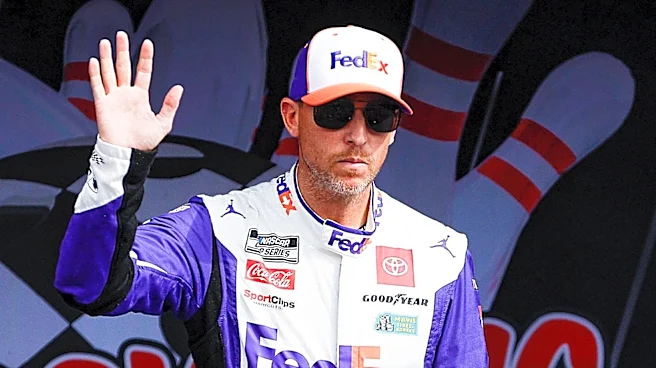
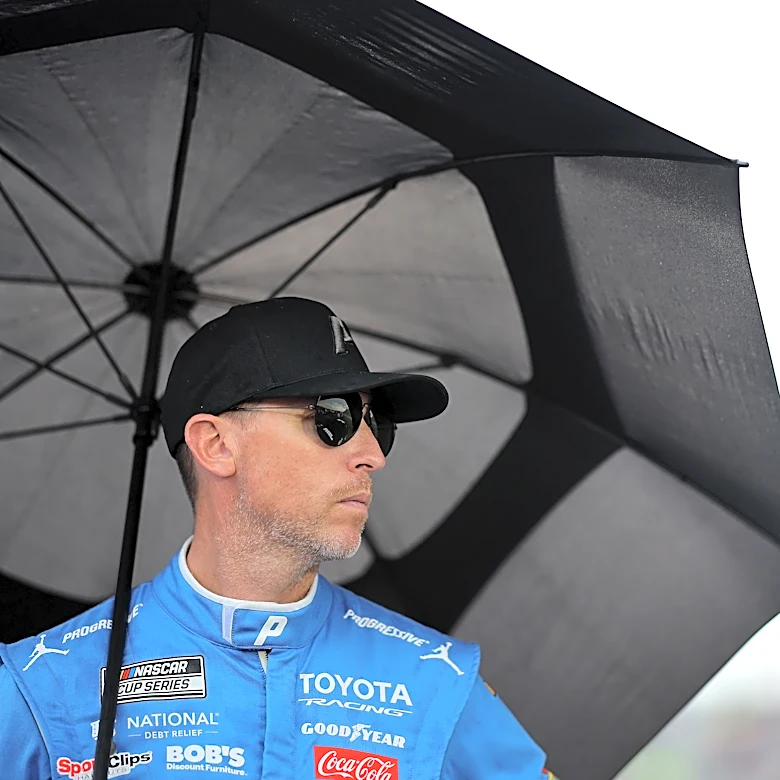
Denny Hamlin, co-owner of 23XI Racing, has disclosed details about his past discussions with Brad Keselowski regarding a potential move to 23XI Racing. According to Hamlin, Keselowski sought not only a substantial salary but also an ownership stake in the
team. These talks did not materialize into a deal, leading Keselowski to join Roush Fenway Racing (now RFK Racing) before the 2022 NASCAR Cup Series season, where he secured an ownership role. Hamlin shared these insights on his 'Actions Detrimental' podcast, reflecting on Keselowski's career trajectory and his current situation at RFK Racing. Hamlin emphasized that Keselowski was firm in his demands for both financial compensation and control, indicating a strong desire for a leadership position within a racing organization.
Why It's Important?
This revelation highlights the evolving landscape of driver contracts and team ownership in NASCAR. Keselowski's insistence on an ownership stake underscores a growing trend where veteran drivers seek more than just a seat in a car; they desire a long-term investment and influence over the team's direction. This approach can lead to more stable and committed relationships between drivers and teams, potentially fostering greater success and longevity. For teams like 23XI Racing, it means navigating complex negotiations that extend beyond traditional driver salaries. The pursuit of ownership by drivers like Keselowski and Hamlin (who co-owns 23XI Racing) signifies a shift towards driver-entrepreneur models, which could reshape team structures and financial dynamics within the sport. This trend also impacts the competitive balance, as drivers with ownership stakes might have a more vested interest in the team's overall performance and strategic decisions.
What's Next?
The discussions surrounding Brad Keselowski's future at RFK Racing, particularly in light of Denny Hamlin's comments, suggest potential shifts in the NASCAR driver market. Hamlin indicated that Keselowski's departure from RFK Racing could be a 'lose-lose' situation, implying that both parties might benefit from continuing their collaboration. However, with RFK Racing reportedly having more drivers than available charters, difficult decisions regarding team composition are likely on the horizon. Keselowski, despite the current situation, remains a highly valued asset due to his experience, racing IQ, and organizational building skills, making him an attractive option for other teams. The coming seasons will likely see how these ownership and control dynamics continue to play out, potentially influencing other drivers to seek similar arrangements and further altering the traditional driver-team relationship model in NASCAR.
Beyond the Headlines
The pursuit of ownership by prominent NASCAR drivers like Brad Keselowski and Denny Hamlin reflects a deeper strategic shift within professional sports. This trend moves beyond the traditional athlete-employee model, empowering drivers to become significant stakeholders in their teams. This not only provides financial security beyond their driving careers but also grants them a greater voice in team management, strategy, and long-term vision. Such arrangements can foster a more collaborative environment, where drivers' on-track experience directly informs off-track decisions, potentially leading to more innovative and successful team operations. However, it also introduces complexities, such as managing potential conflicts of interest and balancing the roles of driver and owner. This evolution could inspire other athletes across various sports to seek similar ownership opportunities, fundamentally altering the power dynamics between athletes and organizations and promoting a more entrepreneurial spirit within professional sports.