






What's Happening?
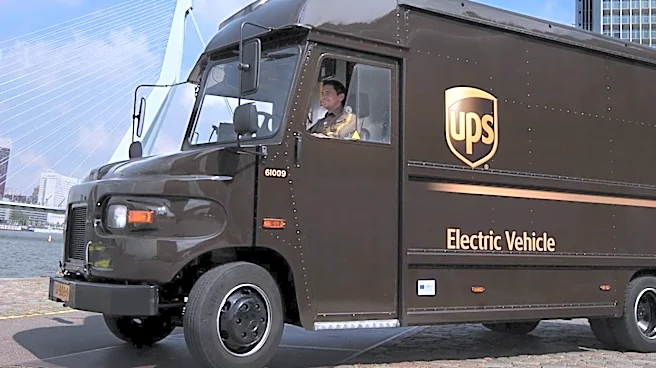
UPS CEO Carol Tomé announced on July 28 that the company has successfully completed an 18-month initiative to reduce its business relationship with Amazon. This strategic move involved eliminating approximately 2 million packages per day of what Tomé described
as 'lower-quality Amazon volume.' The reduction in Amazon-related shipments led to the removal of roughly $4.5 billion in associated expenses for UPS. As a result of this 'Amazon glide down' and network reconfiguration, UPS reported a 6% year-over-year increase in its second-quarter U.S. domestic revenue. The company's non-GAAP (adjusted) operating margin for the segment expanded by a full percentage point to 8%, and UPS has raised its full-year revenue outlook to approximately $91.2 billion. Tomé noted that excluding Amazon and other intentionally shed volume, UPS's overall volume actually grew in the second quarter.
Why It's Important?
This strategic shift by UPS highlights a significant re-evaluation of profitability versus volume in the logistics industry, particularly concerning large e-commerce clients. By shedding lower-margin Amazon packages, UPS has demonstrated a commitment to enhancing its financial performance, even if it means reducing its largest customer's volume. This decision underscores the increasing cost of residential e-commerce delivery and its impact on carrier profitability. For Amazon, the cessation of 2 million daily packages from UPS means a greater reliance on its own expanding delivery network, which is incurring substantial costs. Amazon's worldwide shipping costs rose 19% to $27.9 billion in the second quarter, outpacing its online-store sales growth of 15%. This indicates that while Amazon gains more control over its delivery speed and customer promise, it bears the full financial burden of these operations, including building out infrastructure in areas where traditional carriers charge surcharges.
What's Next?
Amazon is expected to continue expanding its own delivery capabilities to absorb the volume no longer handled by UPS. The company is investing over $4 billion to triple its rural delivery footprint by the end of the year, aiming to reach more than 13,000 ZIP codes with over 200 delivery stations. This expansion is designed to handle over a billion additional packages annually, particularly in rural areas where traditional carriers like FedEx and UPS impose higher surcharges. The ongoing investment in Amazon's logistics network suggests a long-term strategy to internalize delivery operations, which could further impact traditional carriers. While Amazon's shipping costs are rising, the company views delivery as an integral part of its customer offering, prioritizing speed and control. This trend could lead to increased competition and potentially more specialized roles for remaining third-party logistics providers.
Beyond the Headlines
The move by UPS to reduce its reliance on Amazon signals a broader recalibration of power dynamics between major e-commerce platforms and their logistics partners. It suggests that carriers are increasingly willing to prioritize their own profitability and network efficiency over simply maximizing volume, even from dominant players. This could lead to a more diversified client base for carriers and potentially more favorable terms for their services. For Amazon, while costly, building out its own extensive delivery network offers strategic advantages, including greater control over the customer experience, data, and operational flexibility. This shift could accelerate the trend of large retailers developing in-house logistics capabilities, potentially reshaping the entire parcel delivery landscape and creating new challenges and opportunities for smaller, specialized logistics firms.