






What's Happening?
Mondelez International, PepsiCo, and Constantia Flexibles are collaborating on a trial in Belgium to implement invisible digital watermarks on flexible packaging. This initiative, part of the HolyGrail 2030 consortium, aims to improve the sorting and recycling
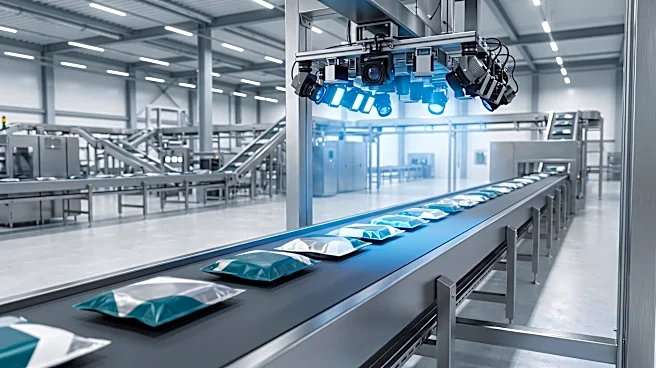
of plastic food packaging, particularly for materials that have come into contact with food. The digital watermarks, embedded in wrappers and films, allow sorting equipment to accurately identify packaging types and separate food-contaminated materials. This real-world trial involves collecting packaging through Belgium's local recycling systems and sending sorted bales to Hündgen Entsorgungs' sorting center in Germany, where high-resolution cameras from Pellenc ST read the watermarks. Richard Akkermans, European R&D packaging productivity and sustainability manager at Mondelez International, emphasized the importance of HolyGrail 2030 as a cross-industry effort for better sorting and recycling in the EU.
Why It's Important?
This trial is significant for the U.S. packaging and recycling industries, as it demonstrates a scalable solution for improving the circularity of flexible plastic packaging. While the trial is in Belgium, its success could pave the way for similar technologies to be adopted in the U.S., addressing a major challenge in plastic waste management. Flexible packaging, often used for snacks and food products, is notoriously difficult to recycle due to its multi-material composition and potential food contamination. Digital watermarking offers a precise method for sorting, which could increase the supply of high-quality recycled plastic. This is crucial for companies like Mondelez and PepsiCo, which are facing increasing pressure and potential future regulations to incorporate recycled content into their packaging. The initiative also highlights a growing trend of collaboration between FMCG brands, industry, and circular economy initiatives, pushing the boundaries of conventional packaging roles.
What's Next?
The ongoing trial in Belgium will provide critical data on the effectiveness and scalability of digital watermarking technology for flexible packaging recycling. If successful, this technology could be expanded to other regions, including the U.S., potentially transforming how plastic waste is sorted and processed. The insights gained will be vital for developing industry standards and informing future policy decisions regarding packaging design and recycling infrastructure. Major stakeholders, including packaging manufacturers, consumer goods companies, and recycling facilities, will closely watch the results to assess the feasibility of widespread adoption. The ultimate goal is to create a more robust supply chain for recycled plastics, helping companies meet sustainability targets and reduce their environmental footprint.
Beyond the Headlines
The adoption of digital watermarking technology in packaging represents a deeper shift towards smart and sustainable manufacturing practices. This innovation moves beyond the traditional protective role of packaging, integrating it with advanced data and sorting capabilities. Ethically, it addresses the growing public concern over plastic pollution and the need for more effective recycling solutions. Legally, it anticipates future regulations, such as the EU's upcoming recycled-content requirements, pushing companies to proactively invest in circular economy solutions. Culturally, it signifies a broader societal move towards greater environmental responsibility and the integration of technology to solve complex ecological challenges. The success of such initiatives could redefine consumer expectations for product packaging, emphasizing not just convenience but also environmental impact and recyclability.