








What's Happening?
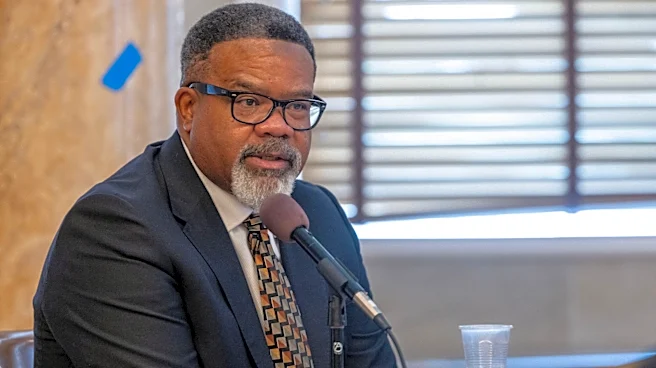
Carlisle Clarke, a Hollandale native, has been named the new CEO of the Delta Council, becoming the fourth individual to hold this position in the organization's over 90-year history. Clarke joins the Delta Council after serving as vice president at Van
Scoyoc Associates, a multi-client lobbying firm in Washington, D.C., where he worked since 2019. His career in Washington, D.C., spans 12 years on Capitol Hill, including a role as the majority clerk of the Senate Appropriations Subcommittee on Agriculture, Rural Development, Food and Drug Administration and Related Agencies. In this capacity, he managed funding and administrative oversight for the U.S. Department of Agriculture and the FDA, including disaster supplemental appropriations. Senator Roger Wicker (R-Miss.) congratulated Clarke, expressing his anticipation of working with him and the Delta Council to advance the interests of the Mississippi Delta. Senator Cindy Hyde-Smith (R-Miss.) also lauded Clarke's selection, emphasizing his understanding of the Delta's challenges and opportunities and his strong relationships built in Washington.
Why It's Important?
The appointment of Carlisle Clarke as CEO of the Delta Council is significant for the economic development and agricultural interests of the Mississippi Delta. Clarke's extensive experience in Washington, D.C., particularly his work on the Senate Appropriations Subcommittee on Agriculture, provides him with a deep understanding of federal policy and funding mechanisms crucial for rural development. His prior role on the Presidential Transition Team in 2016, where he helped craft policy priorities for the USDA under President Trump, further underscores his expertise in agricultural policy. This background positions him to effectively advocate for the Delta's needs at the federal level, potentially securing vital resources and influencing policies that benefit the region's agriculture and rural communities. The bipartisan support from Senators Wicker and Hyde-Smith highlights the importance of this role and the expectation that Clarke will be a strong voice for Mississippi's Delta region, impacting its economic growth and addressing its unique challenges.
What's Next?
As the new CEO, Carlisle Clarke will be tasked with leading the Delta Council in its mission to promote economic development and address common problems in the 19 Delta and part-Delta counties of Northwest Mississippi. His immediate focus will likely involve leveraging his relationships and expertise in Washington, D.C., to secure funding and advocate for policies beneficial to the region's agricultural sector and rural development initiatives. This could include working on issues related to agricultural subsidies, infrastructure improvements, and other federal programs that support the Delta's economy. The Delta Council, under Clarke's leadership, is expected to continue its role as a forum for agricultural, business, and professional leaders to collaborate on regional issues. Future actions may involve developing new strategies for economic growth, addressing challenges in the agricultural industry, and fostering partnerships with federal and state agencies to implement development projects.
Beyond the Headlines
Carlisle Clarke's appointment signifies a strategic move by the Delta Council to enhance its influence and effectiveness in Washington, D.C. His background as a former Capitol Hill staffer and his involvement in a presidential transition team suggest a deep understanding of the political landscape and how to navigate it to achieve regional objectives. This could lead to a more proactive and successful approach in securing federal support for the Mississippi Delta, a region often facing significant economic and social challenges. The emphasis on his ability to craft policy priorities for the USDA indicates a potential for the Delta Council to play a more direct role in shaping national agricultural policy, rather than merely reacting to it. This leadership change could also inspire other regional economic development organizations to seek leaders with strong federal government experience to better advocate for their constituents' interests, highlighting a growing trend of localized entities seeking to influence national policy directly.