





What's Happening?
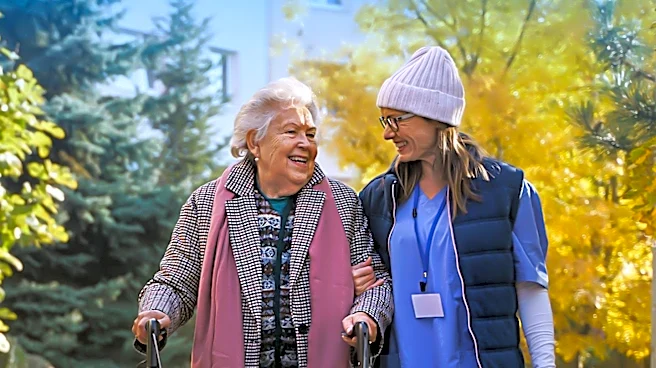
The ElderFIT blog has published an article detailing the advantages of having a senior workout buddy and offering tips on how to find one. The article emphasizes that exercising with a companion can significantly increase accountability and enjoyment,
making it easier for seniors to adhere to recommended physical activity guidelines. It also highlights the social benefits of exercising with others, which can contribute to cognitive health and overall well-being. For those who prefer individualized support, ElderFIT connects older adults with certified in-home personal trainers specializing in strength, balance, mobility, and maintaining independence. The blog suggests various avenues for finding a workout buddy, including friends, family, neighbors, senior centers, YMCA programs, walking groups, fitness classes, and online communities, while also advising common-sense safety precautions for online interactions.
Why It's Important?
This information is important because it addresses a critical aspect of senior health in the U.S.: consistent physical activity and social engagement. The Centers for Disease Control and Prevention (CDC) recommends that adults aged 65 and older incorporate aerobic, muscle-strengthening, and balance activities into their weekly routines. However, adherence can be challenging. The article underscores that a workout buddy can provide the necessary motivation and accountability, which is vital for maintaining physical function and independence. Furthermore, the social connection fostered through shared exercise combats loneliness and isolation, issues that are increasingly recognized as significant public health concerns among seniors. By offering both peer-based and professional training options, the article provides practical solutions to help seniors stay active and healthy, potentially reducing healthcare costs associated with inactivity and social isolation.
What's Next?
As the U.S. population continues to age, there will likely be an increased focus on community-based and personalized solutions to support senior fitness and social well-being. We can expect to see more programs and resources emerging to facilitate connections between seniors seeking workout partners, potentially leveraging technology to match individuals based on compatibility. Additionally, the demand for certified in-home personal trainers specializing in senior fitness is likely to grow, leading to more training programs and certifications in this niche. Healthcare providers and public health initiatives may also increasingly promote the benefits of social exercise and peer support groups as part of a holistic approach to senior care, encouraging greater participation in such activities.
Beyond the Headlines
The emphasis on senior workout buddies and personalized training extends beyond mere physical exercise; it touches upon the fundamental human need for connection and purpose. In a society that often marginalizes its elderly, initiatives that encourage active participation and social bonding can significantly enhance quality of life. The article subtly highlights the ethical consideration of ensuring that all seniors, regardless of their social network or financial status, have access to opportunities for physical activity and companionship. It also points to a cultural shift where aging is viewed not as a period of withdrawal but as an ongoing journey of health and engagement, challenging ageist stereotypes and promoting a more inclusive vision of community.