


What's Happening?
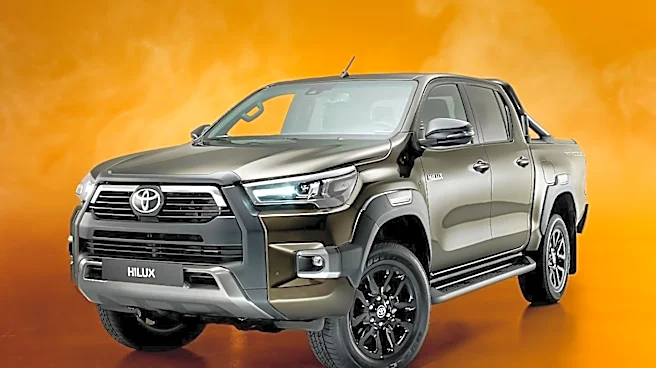
Toyota Australia has received final approval from the Federal Court of Australia for a $750 million settlement in a class action lawsuit. The lawsuit centered on a faulty diesel particulate filter (DPF) system in certain Toyota vehicles. The affected
models include the Toyota HiLux, Toyota Fortuner, and Toyota LandCruiser Prado, all equipped with the 2.8-liter four-cylinder turbo-diesel engine. A total of 264,170 units were impacted by the DPF issues, which led to problems such as smoke emission, foul odors, increased fuel consumption, and vehicles entering a 'limp-home' mode. The DPFs, designed to burn off harmful pollutants, would become clogged if they did not reach their optimal operating temperature, often occurring in vehicles used for short journeys. Toyota Australia had initially agreed to the settlement in October 2026, pending court approval, which has now been granted. This settlement is reportedly the largest in Australian history, surpassing the 'Robodebt' class action.
Why It's Important?
This settlement is significant for several reasons. Firstly, its sheer size, at $750 million, highlights the substantial financial implications for automotive manufacturers when product defects lead to widespread consumer dissatisfaction and legal action. For context, this amount is nearly double Toyota Australia's after-tax profit for the financial year ending March 31, 2026. Secondly, it underscores the importance of effective emissions control systems in modern vehicles and the consequences when these systems fail to perform as intended. The issues experienced by owners, such as increased fuel consumption and reduced vehicle performance, directly impacted their daily lives and businesses, particularly for tradespeople relying on these vehicles. The case also sets a precedent for consumer protection in the automotive industry, demonstrating that manufacturers can be held accountable for widespread defects. Owners involved in the case are expected to receive up to $7370 in compensation, providing some redress for their experiences.
What's Next?
With the settlement now approved, the next steps involve the distribution of compensation to the affected vehicle owners. While owners are set to receive up to $7370, the court has deferred a final ruling on the commission amount for Balance Legal Capital, the firm that funded the lawsuit, which could potentially receive up to $244 million. Justice Michael Lee has indicated that the payout to the legal funder requires a 'reality check,' suggesting further scrutiny on that specific allocation. Toyota Australia has stated its commitment to assisting impacted customers and continues to offer a free-of-charge remedy for the DPF issue, which has been available since 2020. The company has also issued an apology for any inconvenience or discomfort experienced by its customers. This resolution may also prompt other automotive manufacturers to review their DPF systems and customer support protocols to avoid similar large-scale class actions.
Beyond the Headlines
This landmark settlement extends beyond immediate financial compensation, touching upon broader implications for corporate responsibility and consumer trust in the automotive sector. The case highlights the complex engineering challenges associated with meeting stringent emissions standards while ensuring vehicle reliability and performance. The 'limp-home' mode, a safety feature designed to protect the engine, inadvertently became a source of significant frustration and inconvenience for owners, underscoring the need for robust testing and real-world scenario planning in vehicle design. Furthermore, the substantial payout to the legal funder, currently under review, raises questions about the economics of class action lawsuits and the balance between compensating victims and remunerating legal financiers. This case could influence future legal strategies for consumer advocacy groups and prompt legislative discussions around product liability and class action funding mechanisms in Australia and potentially beyond.