
What's Happening?
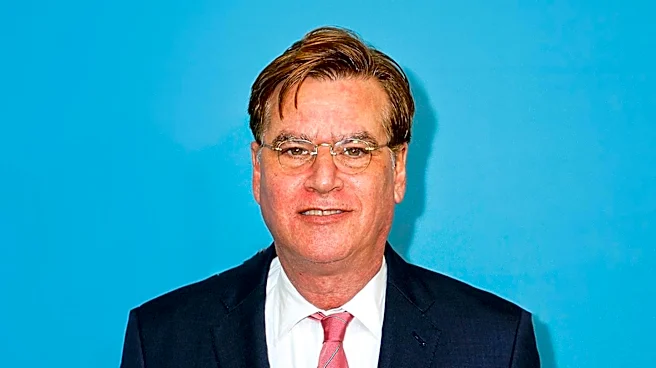
Aaron Sorkin's film, 'The Social Reckoning,' which dramatizes the 2021 Facebook leak by whistleblower Frances Haugen and Wall Street Journal reporter Jeff Horwitz, has been critically panned. The film is described
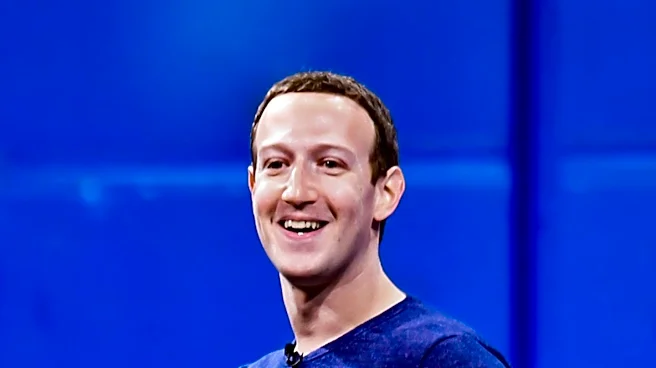
as a 'total misfire,' struggling to generate dramatic tension from a five-year-old scandal that was widely publicized. Critics note that the script feels like a 'pedestrian Wikipedia recap,' lacking a sense of urgency or danger. The casting has also been criticized, with Mikey Moore deemed too glamorous for a tech insider and Jeremy Strong's portrayal of Mark Zuckerberg missing the 'uncanny, robotic detachment' of the real CEO, instead opting for a 'brooding Shakespearean tragic hero' approach. The film's inability to engage viewers leads to nitpicking of implausible details and artificial staging.
Why It's Important?
The critical failure of 'The Social Reckoning' highlights the challenges in adapting recent, well-known events into compelling cinematic narratives. For the film industry, this case demonstrates that even with a renowned writer like Aaron Sorkin and a significant real-world event, a lack of dramatic tension and miscasting can lead to a box office disappointment. This could influence future decisions regarding the greenlighting and production of films based on contemporary news stories, potentially leading studios to favor narratives with more inherent dramatic mystery or historical distance. For audiences, it underscores the difficulty in creating a fresh perspective on events they have already experienced through live media, setting a high bar for originality and depth in such adaptations.
What's Next?
The poor reception of 'The Social Reckoning' may lead to a re-evaluation of strategies for adapting recent technological and political events into film. Filmmakers might explore more fictionalized approaches or focus on lesser-known aspects of such stories to create dramatic tension. The film's performance could also impact the careers of those involved, particularly in terms of future projects that aim to tackle similar contemporary subjects. For the broader entertainment landscape, this outcome could reinforce the perception that audiences prefer original stories or historical events with sufficient distance to allow for creative interpretation, rather than direct dramatizations of recent news cycles.
Beyond the Headlines
The film's struggle to portray Mark Zuckerberg accurately, despite Jeremy Strong's acting talent, raises questions about the public's perception of tech leaders and the challenge of capturing complex, often non-emotive personalities on screen. The critique that Strong's portrayal missed Zuckerberg's 'uncanny, robotic detachment' suggests a societal expectation for how such figures should be depicted, reflecting a broader cultural understanding of their public personas. This also touches on the ethical considerations of dramatizing real individuals, especially when their public image is already so defined. The film's failure to resonate also points to a potential saturation of 'Big Tech' narratives, indicating that audiences may be seeking more nuanced or less didactic explorations of technology's impact.