





What's Happening?
Boeing has announced the development of an Ultra Low-Cost Seeker (ULCS), a radar seeker designed to reduce costs and increase the production of offensive and defensive weapons. The ULCS has demonstrated its ability to withstand harsh conditions and track
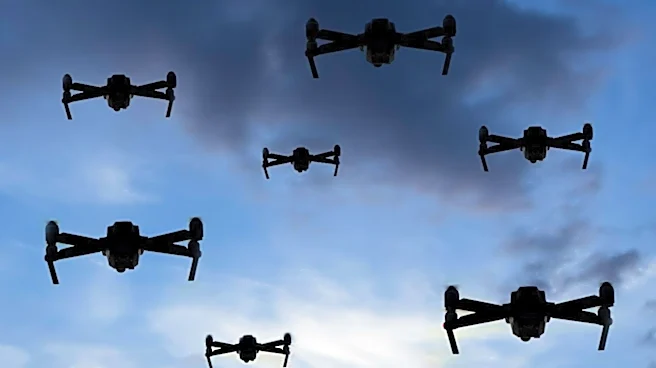
targets effectively. Meanwhile, Northrop Grumman has introduced the Raid Hunter, a 50mm gun-based air defense system aimed at countering threats like drone swarms and cruise missiles. The Raid Hunter features a maneuverable 50mm munition networked with a sensor system for precise targeting. Both companies are responding to the Pentagon's demand for more affordable and mass-produced defense solutions.
Why It's Important?
The development of cost-effective defense technologies like the ULCS and Raid Hunter is crucial as the U.S. military seeks to maintain its strategic edge while managing budget constraints. The ULCS aims to address production bottlenecks in missile systems, potentially increasing the availability of critical defense assets. Northrop Grumman's Raid Hunter offers a scalable solution to counter emerging aerial threats, enhancing national security. These innovations reflect a broader industry trend towards affordability and efficiency in defense procurement, which could influence future military strategies and spending priorities.
What's Next?
Boeing plans to conduct multiple flight tests of the ULCS next year to further validate its capabilities. Northrop Grumman is preparing for additional tests of the Raid Hunter, with an operational prototype expected by summer 2027. Both companies are likely to continue refining these technologies to meet evolving military requirements. The success of these projects could lead to increased adoption of low-cost defense solutions across various military applications, potentially reshaping the defense industry's approach to technology development and deployment.