


What's Happening?
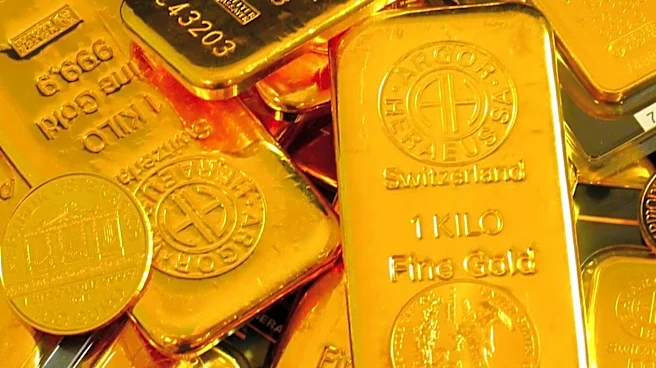
Gold prices have remained stable, trading near $4,075.60 an ounce, as tensions between the U.S. and Iran impact crude oil prices. The recent pause in U.S.-Iran attacks has eased some pressure on crude oil, with Brent crude settling at $85.87 a barrel
and U.S. crude at $82.61 a barrel. This development has reduced oil-led inflation pressure, affecting Treasury yields and the U.S. dollar index. The Federal Reserve's upcoming decision on interest rates is a key factor influencing gold prices, with markets anticipating a possible 25-basis-point hike. The Strait of Hormuz remains a critical risk factor for energy markets, affecting gold's price stability.
Why It's Important?
The stability of gold prices amid geopolitical tensions and fluctuating crude oil prices highlights the metal's role as a safe-haven asset. The U.S.-Iran conflict and its impact on the Strait of Hormuz, a vital oil shipping route, underscore the interconnectedness of global energy markets and precious metals. The Federal Reserve's interest rate decisions will significantly influence gold's appeal as an investment, as higher rates could dampen demand. Investors are closely watching these developments to assess the potential impact on inflation and economic stability.
What's Next?
The Federal Reserve's decision on interest rates will be a pivotal moment for gold prices. A rate hike could limit gold's upside potential, while a pause or cut could boost its appeal. The ongoing U.S.-Iran tensions and their impact on oil prices will continue to influence gold's price trajectory. Investors will be monitoring geopolitical developments and central bank policies to navigate the complex landscape of precious metals and energy markets.