







What's Happening?
A recommended 10-day Italy travel itinerary emphasizes a relaxed pace, connecting Rome, Florence, Verona, and Venice by train. This itinerary suggests spending three nights in Rome, three in Florence, one in Verona, and two in Venice, allowing travelers
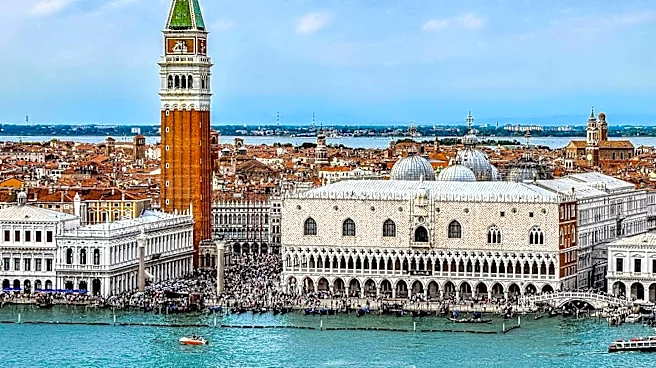
to experience major sights, local cuisine, and cultural nuances without feeling rushed. The plan advises flying into Rome and departing from Venice to avoid backtracking. Key activities include exploring ancient landmarks and Vatican City in Rome, Renaissance art and local food in Florence, and canals and St. Mark's Square in Venice. Travelers are encouraged to prioritize experiences over attempting to see every attraction, with flexibility built in for unexpected discoveries and leisurely meals. The itinerary also provides practical advice on train travel between cities, airport usage, and booking attractions in advance.
Why It's Important?
This structured travel guide is important for U.S. tourists planning their first trip to Italy, offering a manageable and enjoyable experience. By focusing on a few key cities and efficient train travel, it helps mitigate common travel stressors such as over-scheduling and logistical complexities. The emphasis on a relaxed pace and cultural immersion rather than a frantic sightseeing marathon can lead to a more satisfying and memorable vacation for American travelers. For the U.S. travel industry, such itineraries can influence booking patterns, promoting specific destinations and modes of transport. It also highlights the growing demand for curated, stress-free international travel experiences, potentially impacting how travel agencies and tour operators design their packages for the U.S. market. The advice on booking in advance and managing expectations can also reduce negative travel experiences, fostering repeat international travel.
What's Next?
Travelers considering this itinerary will likely proceed with booking flights into Rome (FCO) and out of Venice (VCE), as suggested, to optimize their route. They will also need to secure train tickets between Rome, Florence, Verona, and Venice, and book accommodations in each city. Advance booking for major attractions like the Vatican Museums, Colosseum, and key Florence museums will be a priority, especially given the advice on ticket-release windows. Future travel planning for U.S. tourists to Italy may increasingly adopt similar multi-city, train-based approaches, potentially leading to more integrated travel packages from U.S. tour operators. The success of such itineraries could also encourage the development of similar guides for other popular European destinations, catering to the U.S. market's preference for efficient and culturally rich travel.
Beyond the Headlines
The popularity of curated itineraries like this reflects a broader shift in travel preferences among U.S. tourists, moving away from exhaustive checklists towards more immersive and less hurried experiences. This approach encourages deeper engagement with local culture, food, and daily life, rather than just superficial sightseeing. Ethically, it promotes responsible tourism by encouraging travelers to spend more time and resources in fewer locations, potentially benefiting local economies more sustainably. Culturally, it fosters a greater appreciation for the distinct regional identities within Italy, moving beyond a monolithic view of the country. The emphasis on flexibility and personal choice within a structured framework also speaks to a desire for personalized travel experiences, even within guided suggestions, highlighting an evolving relationship between travelers and their destinations.