




What's Happening?
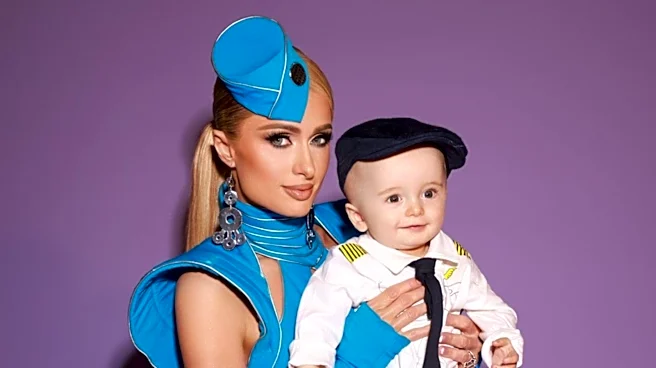
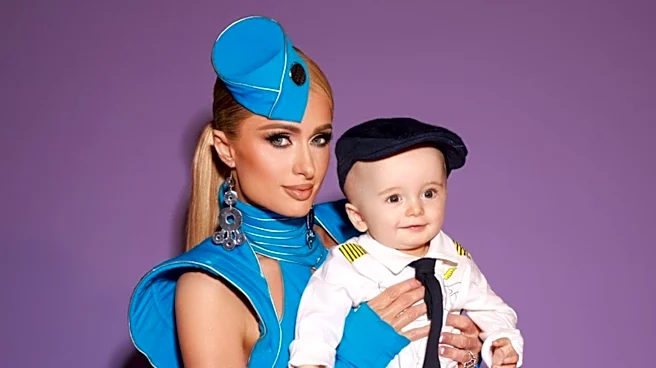
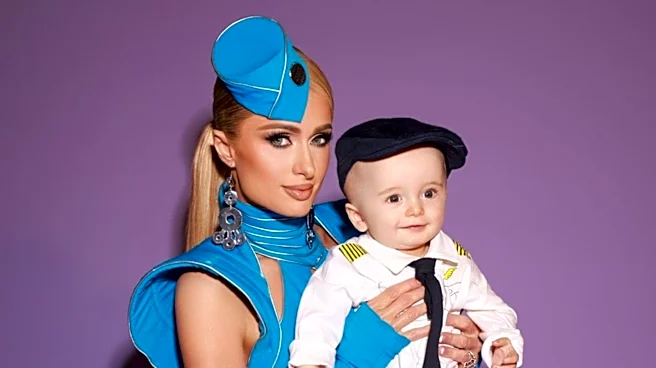
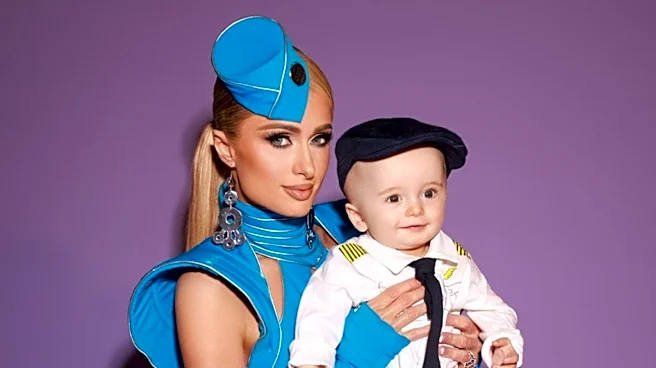
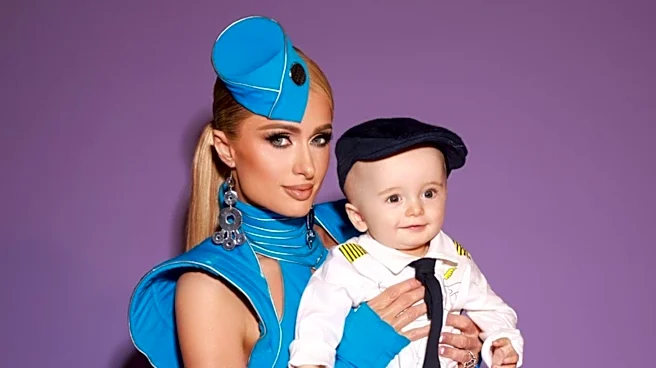
Paris Hilton recently faced online criticism regarding her family's 'Beauty and the Beast' Halloween costumes. Hilton dressed as Belle, her husband Carter Reum as the Beast, their son Phoenix as Lumière, and their daughter London as Chip. The controversy
arose from critics suggesting Hilton made herself the 'main character' and that London, her daughter, should have been Belle. Many social media users questioned why Hilton would choose the princess role for herself while her daughter was a side character. However, Hilton clarified the situation, explaining that 'Beauty and the Beast' is one of her children's favorite movies, and London specifically chose to dress as Chip because it was her favorite character in the film. This explanation aimed to counter the narrative that Hilton prioritized her own costume over her daughter's preferences.
Why It's Important?
This incident highlights the intense scrutiny public figures, particularly celebrity parents, face on social media regarding their personal choices. The immediate backlash and subsequent defense reveal a broader societal discussion about parenting, children's autonomy, and the expectations placed on mothers. While seemingly a minor issue, it underscores how quickly online communities can form judgments based on limited information, often projecting their own views onto others. The debate also touches on the idea of 'main character' syndrome and whether parents should always cede the spotlight to their children, even in playful contexts like Halloween. For public figures, managing such online narratives is crucial, as misinterpretations can quickly escalate into widespread criticism, impacting public perception.
What's Next?
The immediate controversy is likely to subside following Paris Hilton's explanation, which clarified her daughter's personal choice in costume. This event serves as a reminder for public figures about the need for transparency and direct communication to address online speculation and criticism. In the broader context, similar situations involving celebrity families and their personal decisions will likely continue to spark online debates, reflecting ongoing discussions about parenting styles, gender roles, and the influence of social media on public opinion. The incident may also encourage other parents to share their children's unique costume choices, normalizing the idea that children often have preferences beyond traditional 'main character' roles.
Beyond the Headlines
Beyond the immediate costume debate, this event subtly touches upon the evolving dynamics of celebrity culture and the blurring lines between public and private life. The expectation that public figures' family decisions must align with certain societal norms, even for something as innocuous as Halloween costumes, reflects a deeper cultural commentary on idealized family images. It also highlights the power of a child's individual preference, challenging the assumption that all children desire the most prominent role. The incident could be seen as a micro-example of how personal narratives are constructed and deconstructed in the digital age, where a simple family photo can become a canvas for broader societal discussions on gender, parenting, and self-expression.