




What's Happening?
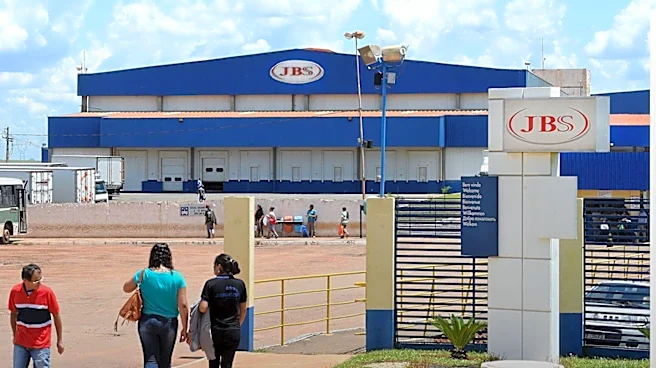
JBS N.V. has finalized a transaction to create a new multi-protein production platform in Oman, focusing on beef, poultry, and lamb processing. This venture, announced in February, involves JBS holding an 80% stake in a newly formed food holding company
that consolidates two production assets in Oman. Oman Food Capital (OFC), the investment arm of the Oman Investment Authority (OIA), holds the remaining 20%. JBS's investment in this joint venture totals $150 million. The company plans to direct this investment towards completing A’Namaa Poultry Co.’s integrated poultry plant and Al Bashayer’s beef and lamb processing facility. These facilities are projected to achieve an estimated static industrial production capacity of approximately 300,000 tons per year, processing about 1,000 head of cattle, 5,000 lambs, and 600,000 chickens daily. This expansion is expected to generate over 3,000 direct jobs in Oman over the next five years across the entire production chain.
Why It's Important?
This strategic move by JBS is significant for its global diversification strategy, allowing the company to expand its geographical footprint and protein offerings. By establishing a presence in Oman, JBS gains proximity to key consumer markets, particularly the global halal market, which is estimated to encompass 2 billion consumers. For Oman, this venture aligns with its Vision 2040, aiming to strengthen food security and diversify its economy away from oil and gas. The partnership is designed to position Oman as a strategic hub for the production and export of halal foods. This expansion could also influence global meat supply chains and competition, potentially impacting U.S. meat producers and exporters by increasing the availability of diverse protein sources from new regions.
What's Next?
JBS will proceed with the completion of the integrated poultry plant and the beef and lamb processing facility in Oman. The operation is expected to reach its full production capacity of 300,000 tons per year, processing a significant volume of cattle, lambs, and chickens daily. The venture will focus on establishing Oman as a strategic hub for halal food production for export, targeting the substantial global halal market. This expansion could lead to increased competition in international meat markets and potentially influence trade dynamics for U.S. meat exports. The creation of over 3,000 direct jobs in Oman will also contribute to the local economy and workforce development.
Beyond the Headlines
The establishment of this multi-protein platform in Oman highlights a broader trend of global food companies seeking to diversify production geographically and by protein type to mitigate risks and tap into new markets. The focus on halal food production underscores the growing economic importance of catering to specific cultural and religious dietary requirements on a global scale. This move could also set a precedent for other major food producers to invest in regions with strategic access to emerging markets and strong government support for economic diversification. The long-term implications include potential shifts in global food trade routes and increased competition for traditional meat-exporting nations, including the U.S.