




What's Happening?
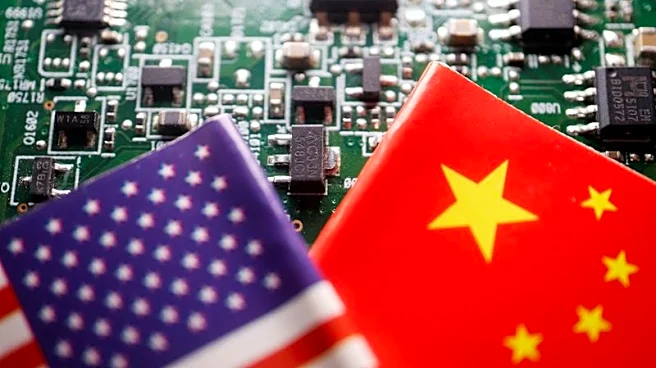
The U.S. semiconductor sector is facing increased scrutiny from Washington following a controversy involving chip giant Nvidia's sales to China. Since 2022, the U.S. has been working to restrict China's access to advanced chip technology. This effort
has gained momentum recently due to an espionage scandal that led to the removal of Nvidia's CEO. California officials are currently investigating whether Nvidia misled investors regarding its connections to Beijing. Federal lawmakers have also revealed documents indicating that the U.S. approved the sale of nearly 880,000 chips to China, some of which went to companies identified as fronts for the Chinese military. This development has reportedly caused significant concern among China's tech giants, who are anticipating new semiconductor restrictions.
Why It's Important?
This intensified scrutiny of chip sales to China has significant implications for the U.S. semiconductor industry and global supply chains. The U.S. government's efforts to curtail China's access to cutting-edge chip technology are driven by national security concerns, particularly regarding the potential military applications of advanced AI chips. For U.S. chip manufacturers like Nvidia and AMD, these restrictions could impact their revenue streams from the lucrative Chinese market. The investigations into companies potentially misleading investors about their ties to Beijing highlight the increasing pressure on corporations to comply with U.S. foreign policy objectives. Furthermore, the broader disruption in the global semiconductor supply chain could affect various industries reliant on these components, from mobile technology to consumer electronics, potentially leading to higher costs or product delays.
What's Next?
The ongoing investigations by California officials into Nvidia's investor communications and the broader federal scrutiny suggest that more stringent regulations on chip exports to China are likely. China's tech giants are already anticipating new semiconductor restrictions, which could lead them to accelerate efforts to develop indigenous chip technology or seek alternative suppliers. The U.S. Commerce Department, which has been accused by a top Republican senator of ignoring warnings about AI chips being smuggled to China, will likely face increased pressure to enforce export controls more rigorously. This situation could also prompt other countries to re-evaluate their own export policies regarding advanced technology to China, potentially leading to a more fragmented global technology landscape.
Beyond the Headlines
The escalating tensions over chip technology between the U.S. and China extend beyond economic competition, touching upon critical issues of national security, technological supremacy, and geopolitical influence. The U.S. government's actions reflect a strategic effort to prevent China from gaining a military or technological advantage through advanced AI capabilities. This situation also raises ethical questions about the responsibility of technology companies in adhering to national security directives and the transparency of their international dealings. The long-term implications could include a decoupling of technological ecosystems, forcing countries to choose sides in the global tech race. This could lead to a bifurcated global standard for technology, impacting innovation, economic growth, and international cooperation in scientific research and development.