





What's Happening?
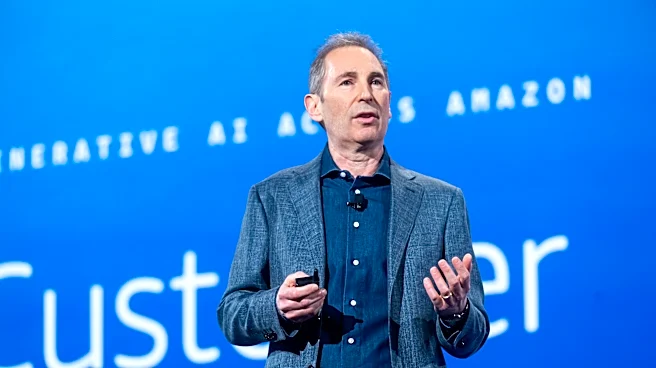
Amazon CEO Andy Jassy recently stated that customers utilizing the company's AI-powered shopping assistant, Rufus (now known as Alexa for Shopping), are approximately 60% more likely to complete a purchase. This statistic, while noted as a correlation
rather than direct causation, suggests that shoppers engaging with AI for product inquiries exhibit higher purchase intent. The AI assistant aims to simplify the shopping journey by allowing customers to ask successive questions, maintain context, and receive personalized recommendations. This 'Ask-Through' approach, as described by an Amazon Ads executive, transforms shopping from a keyword-based search into a conversational experience, addressing consumer needs for confidence in their purchasing decisions rather than just more choices.
Why It's Important?
This development is significant for the U.S. e-commerce landscape and retail industry. The reported increase in purchase completion rates for AI-assisted shopping indicates a powerful shift in consumer behavior and a potential competitive advantage for Amazon. As AI agents become more sophisticated, they can reduce friction in the buying process, leading to higher conversion rates and increased sales. For other retailers, this highlights the urgent need to invest in similar AI-driven conversational commerce tools to remain competitive. Brands must adapt their strategies from traditional search engine optimization to optimizing for AI recommendations, ensuring their product information is clear, credible, and easily digestible by AI assistants. Those who fail to embrace this shift risk losing market share to platforms that offer a more seamless and confident shopping experience.
What's Next?
The success of Amazon's AI shopping assistant suggests a future where conversational AI plays an increasingly central role in online retail. We can expect other major e-commerce players and even traditional brick-and-mortar retailers to accelerate their development and deployment of similar AI tools. This will likely lead to a 'recommendation economy' where brands compete not just on product quality or price, but on their ability to be recommended by AI assistants. Furthermore, the ethical implications of AI-driven recommendations, particularly regarding sponsored placements and transparency, will become a more prominent discussion point. Consumers will increasingly rely on AI for purchasing decisions, making the accuracy, impartiality, and trustworthiness of these AI agents paramount. Brands will need to focus on substantiating claims and addressing product weaknesses, as AI can quickly surface such information.
Beyond the Headlines
The shift from 'search' to 'Ask-Through' represents a fundamental change in how consumers interact with products and brands. It moves beyond simply finding information to having an intelligent agent guide the decision-making process. This has deeper implications for brand building and marketing. In an 'Answer Economy,' a brand's reputation for reliability, customer service, and product integrity becomes even more critical, as AI agents can synthesize vast amounts of data, including reviews and specifications, to form recommendations. This could lead to a more meritocratic marketplace where products with genuine value and transparent information are favored. It also raises questions about the future of traditional advertising, as the 'conversation' with an AI assistant might become the primary touchpoint for influencing purchasing decisions, potentially diminishing the impact of conventional marketing campaigns.