








What's Happening?
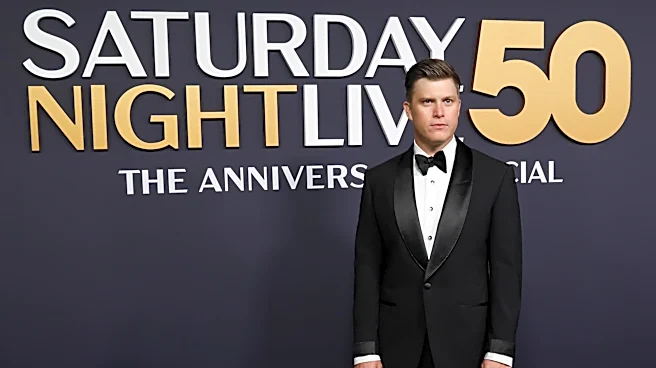
A recent 'Saturday Night Live' sketch titled 'Sister,' featuring host John Mulaney, has gone viral for its satirical portrayal of the unequal division of labor in eldercare. The skit, written by Mikey Day, Streeter Seidell, and Simon Rich, parodies a 'health
service' that suggests men can rely on their sisters to provide free, 24/7 care for aging parents. Mulaney's character, a 'generic dude,' expresses relief that his sister will 'quit her job, break her lease, and move halfway across the country' to care for their father, allowing him to 'get back to my life and the stuff I like to do.' The sketch humorously, yet pointedly, illustrates how many men expect their female siblings to assume the primary caregiving role, often without financial or practical support. It highlights the societal expectation that women are the default caregivers, even when it means significant personal sacrifice.
Why It's Important?
The 'Sister' sketch resonates deeply with millions of American women, particularly those who are primary caregivers for elderly parents. It underscores a significant societal issue: the disproportionate burden of eldercare that falls on women. This phenomenon is not merely a family dynamic but a reflection of broader systemic failures in healthcare and social support. The sketch's viral success, with millions of views and thousands of comments, indicates a widespread recognition of this unspoken truth. It brings to light the 'mental load' carried by women, which includes not only direct care but also the extensive planning, coordination, and emotional labor involved. This unequal distribution of caregiving responsibilities can lead to financial strain, career setbacks, and emotional exhaustion for women, impacting their overall well-being and economic independence.
What's Next?
The viral nature of the 'Sister' sketch could spark more widespread conversations about the need for equitable eldercare solutions and the re-evaluation of gender roles within families. While the skit is comedic, its underlying message may encourage families to address caregiving responsibilities more openly and fairly. It could also prompt discussions among policymakers and advocacy groups about the necessity of robust national eldercare support systems, similar to those for childcare, to alleviate the burden on individual families, especially women. The sketch serves as a cultural touchstone, potentially empowering women to articulate their experiences and encouraging men to recognize and share caregiving duties. The ongoing dialogue could lead to increased awareness and a push for more balanced approaches to family care.
Beyond the Headlines
Beyond its immediate comedic impact, the 'Sister' sketch exposes a critical ethical and cultural dimension of American society. It challenges the ingrained sexist programming that often positions female family members as the 'natural safety net' in a healthcare system that frequently neglects the elderly and infirm. The sketch implicitly critiques a society that expects women to provide the majority of both childcare and eldercare, often simultaneously and while holding full-time jobs, with little to no systemic support. This development highlights the long-term societal shift required to achieve true gender equity in caregiving. It suggests that without significant changes to social norms and public policy, the reliance on an overburdened, unacknowledged 'sister system' will continue to result in personal and societal strain, ultimately impacting the well-being of caregivers and the quality of care for the elderly.