

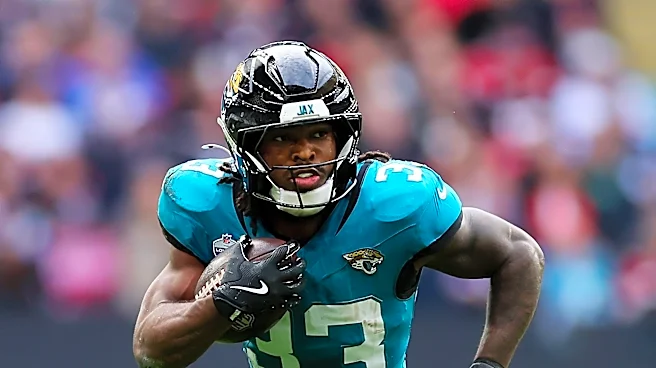

What's Happening?
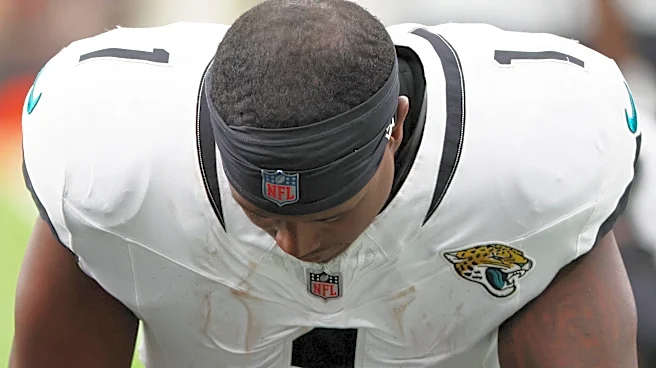
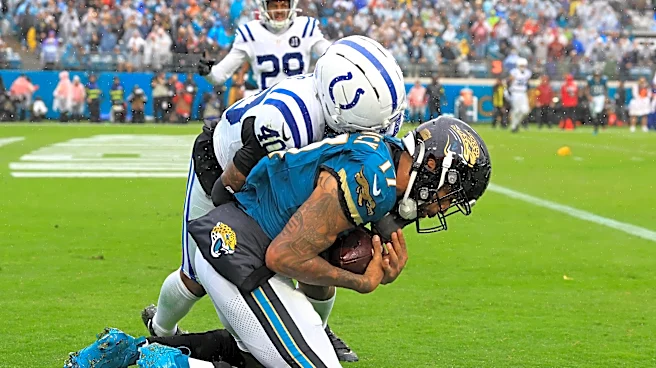
The Jacksonville Jaguars are grappling with decisions regarding wide receiver Brian Thomas Jr. as the NFL trade deadline approaches on November 10. Despite a strong rookie season in 2024, Thomas's performance has declined significantly in his second year,
leading to trade rumors. Head coach Liam Coen has publicly stated that Thomas remains a significant part of the offense, but his targets have decreased, and he has struggled with drops. General Manager James Gladstone previously dismissed trade reports as 'fraudulent claims' in February and March, but the speculation has resurfaced due to Thomas's reduced production and role. The Jaguars are also dealing with a season-ending injury to nose tackle DaVon Hamilton, making defensive line a priority in potential trade scenarios.
Why It's Important?
The situation with Brian Thomas Jr. is critical for the Jaguars' immediate and long-term strategic planning. Trading a former first-round pick after just two seasons, especially one who showed such promise, would represent a significant shift in the team's investment strategy and could signal a lack of confidence in his development. If Thomas is traded, it would open up more opportunities for other young receivers like Josh Cameron and Travis Hunter, potentially accelerating their roles in the offense. Conversely, keeping Thomas means the Jaguars must find a way to integrate him effectively into the new offensive scheme and help him regain his rookie-year form. The decision will impact the team's offensive depth, salary cap, and future draft capital, directly influencing their competitiveness in the AFC South and their ability to address other roster needs, particularly on the defensive line.
What's Next?
The Jaguars have until the November 10 trade deadline to decide on Brian Thomas Jr.'s future. If they choose to trade him, they will likely seek assets, possibly to bolster their defensive line following DaVon Hamilton's injury. If they retain him, the coaching staff will need to redouble efforts to improve his performance and confidence within the new offensive system. This would involve finding ways to increase his targets and ensure he contributes meaningfully, rather than being a fourth or fifth option. The team will also face a decision in the offseason regarding his fifth-year option, which will be a strong indicator of their long-term commitment to him. His performance for the remainder of the season, should he stay, will be under intense scrutiny.
Beyond the Headlines
This scenario highlights the inherent risks and pressures associated with high NFL draft picks. A player's initial success does not guarantee sustained performance, especially with coaching changes and new offensive schemes. The 'sophomore slump' is a common challenge, and how a team manages such a situation can define its organizational philosophy. The Jaguars' dilemma with Thomas also underscores the constant balancing act NFL teams face between player development, immediate team needs, and asset management. It's a microcosm of the broader league trend where teams are increasingly willing to move on from underperforming high-draft picks if they don't fit the evolving team vision or if better opportunities arise to address other critical roster deficiencies.