




What's Happening?
The Barbizon School, a group of French artists active in the mid-19th century, transformed landscape painting by focusing on French nature and rural scenes. Operating from the village of Barbizon near the Fontainebleau forest, these artists, including
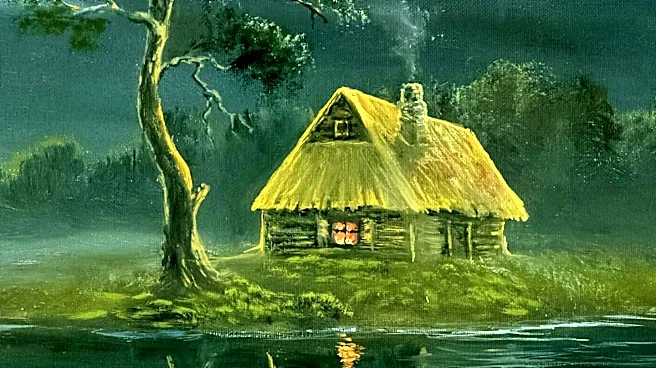
Camille Corot, François Daubigny, and Jean-François Millet, challenged the rigid academic standards of their time. Unlike traditional art, which often relegated landscapes to mere backdrops for historical or mythological narratives, the Barbizon School elevated natural scenes to central subjects. They sought to capture the immediate impressions of nature, emphasizing natural light and space, and often depicted everyday French landscapes rather than idealized or exotic locales. This approach was a significant departure from the prevailing artistic conventions that favored constructed landscapes and historical themes.
Why It's Important?
The Barbizon School's innovative approach to landscape painting was crucial in shaping the trajectory of modern art. By prioritizing direct observation of nature and rejecting the artificiality of academic art, they laid foundational groundwork for subsequent art movements, most notably Impressionism. Their focus on capturing the 'immediate impression' and the effects of natural light directly influenced artists like Claude Monet. The school's willingness to depict ordinary rural life, including the working class, also challenged societal norms and artistic hierarchies, paving the way for Realism. This shift in subject matter and technique broadened the scope of what was considered worthy of artistic representation, making art more accessible and reflective of contemporary reality rather than solely historical or mythological narratives.
What's Next?
While the Barbizon School itself is a historical movement, its legacy continues to influence contemporary art and art education. The principles they championed—direct observation, emphasis on light and atmosphere, and the elevation of everyday subjects—remain relevant. Modern artists and art students often study the Barbizon School to understand the evolution of landscape painting and the transition from academic traditions to more modern approaches. The movement's impact on Impressionism means that its influence is deeply embedded in the development of modern art. Future art historical research may continue to uncover deeper connections between the Barbizon School and other artistic developments, further solidifying its place as a pivotal moment in art history.
Beyond the Headlines
The Barbizon School's impact extends beyond mere artistic technique; it represents a broader cultural and philosophical shift. Their decision to leave urban art institutions for a remote village was a statement against the established art world and a commitment to finding inspiration in real life. This move highlighted a growing desire among artists to connect with nature and everyday existence, rather than adhering to prescribed artistic themes. The initial negative reception from critics, who found their subjects 'mundane' or 'provocative,' underscores the radical nature of their work. This resistance to conventional taste and the eventual acceptance of their style illustrate the dynamic tension between artistic innovation and societal expectations, a theme that continues to resonate in the art world today. The school's emphasis on light and atmosphere also reflects a deeper engagement with the sensory experience of nature, foreshadowing later scientific and philosophical inquiries into perception.