






What's Happening?
Minimalism, often misunderstood as simply owning less, is being redefined for family homes to emphasize strategic storage and a consistent material palette rather than a drastic reduction in possessions. The conventional advice to 'own less, buy less, throw
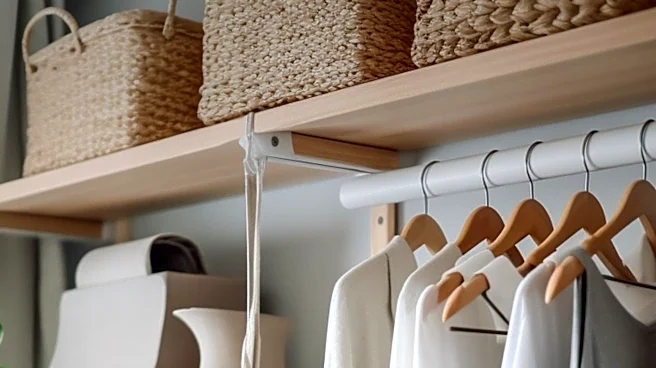
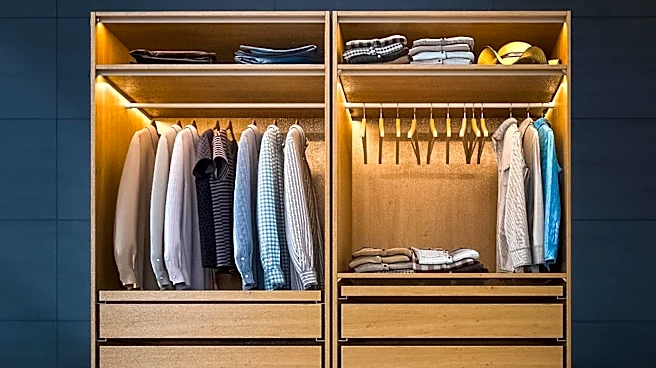
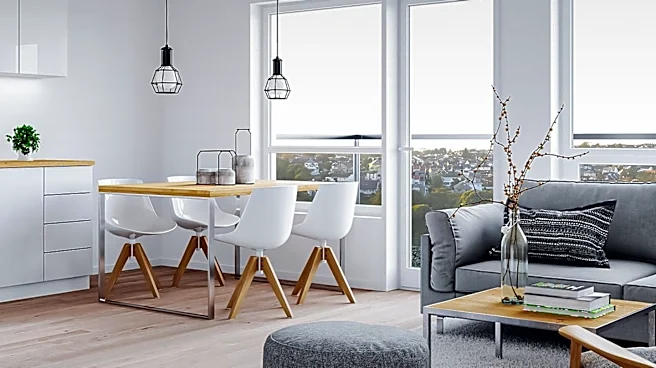
more away' often fails in households with children, games consoles, and school bags. Instead, a truly minimalist family living room can contain numerous objects, provided that most are out of sight behind closed storage. The core discipline lies in a well-thought-out storage plan and a limited selection of materials, rather than a continuous purge of items. This approach addresses the 'visibility problem' where clutter is perceived due to items being in view, rather than an actual 'quantity problem.' For families looking to refresh their homes, the focus should be on building adequate storage solutions before attempting to remove items, ensuring that the space remains functional and inviting.
Why It's Important?
This reinterpretation of minimalism is significant for U.S. families and the interior design industry as it offers a more practical and sustainable approach to home organization and aesthetics. By shifting the focus from purging to strategic storage and material selection, it makes minimalist design principles accessible to a broader demographic, including those with active family lives. This can lead to less stress and more functional living spaces, as families are no longer pressured to constantly declutter or live with an impractical scarcity of items. For the design industry, it highlights a growing demand for innovative storage solutions and durable, versatile materials that can withstand the demands of family life while maintaining a clean aesthetic. This approach also encourages a more mindful consumption pattern, where quality and utility are prioritized over sheer volume, potentially influencing consumer spending habits in home goods and furniture.
What's Next?
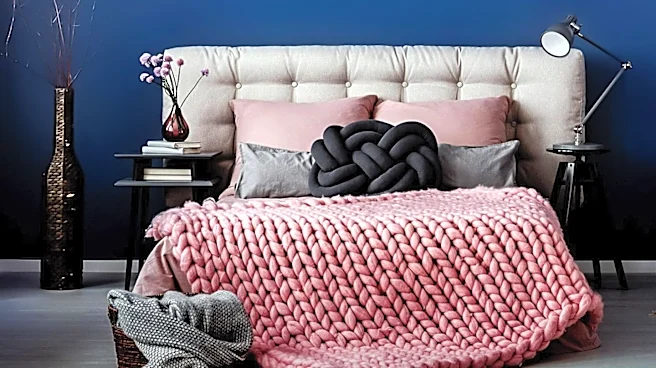
The evolving understanding of minimalism is likely to drive new trends in home design and product development. We can expect to see an increased emphasis on integrated and hidden storage solutions in furniture and architectural designs, catering specifically to the needs of families. Manufacturers may focus on creating modular and multi-functional pieces that help maintain a tidy appearance while accommodating numerous items. Interior designers will increasingly incorporate a limited, cohesive material palette, utilizing warm wood tones, soft fabrics, and subtle deep colors to create inviting minimalist spaces. Educational content and design resources will probably shift to promote these practical aspects of minimalism, offering guidance on effective storage planning and material selection rather than just decluttering tips. This could also lead to a greater appreciation for custom-built storage and thoughtful spatial planning in residential architecture.
Beyond the Headlines
The redefinition of minimalism for family homes touches upon deeper societal values concerning consumption, domestic life, and mental well-being. In a culture often characterized by consumerism, this approach offers a counter-narrative that values order and calm without demanding extreme sacrifice. It acknowledges the reality of family life, where possessions accumulate, and provides a framework for managing them effectively. Ethically, it promotes a more sustainable lifestyle by encouraging thoughtful purchasing and maximizing the utility of existing items through better organization. Culturally, it challenges the often-unrealistic portrayals of minimalist homes, making the aesthetic more attainable and less intimidating for the average household. This shift could foster a greater sense of peace and functionality within homes, contributing to improved family dynamics and reduced stress associated with cluttered environments.