





What's Happening?
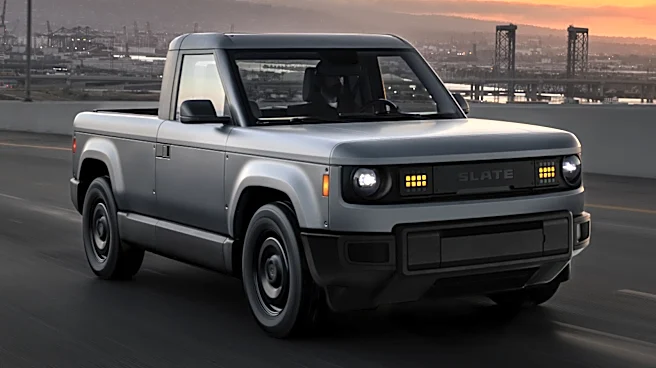
Slate Auto, an EV startup supported by Jeff Bezos, is set to begin deliveries of its $25,000 electric pickup truck by the end of this year. The vehicle, dubbed the 'Blank Slate,' embraces a minimalist design philosophy, featuring two seats, hand-crank
windows, no infotainment system, no speakers, and no exterior paint. Customers wishing for a colored truck will need to opt for a polymer exterior wrap. This no-frills approach and competitive price point have generated significant interest, with the company reporting over 180,000 reservations. The emergence of Slate Auto coincides with a broader trend of consumers, particularly Gen Z, expressing a preference for simpler, less technologically complex vehicles, moving away from the feature-rich, 'smart' cars that have dominated the market for decades. This shift is driven by factors such as price sensitivity, technological overload, and privacy concerns regarding data sharing in modern vehicles.
Why It's Important?
Slate Auto's entry into the EV market with a low-cost, low-tech pickup could significantly disrupt the automotive industry's current trajectory, which has largely focused on increasing vehicle complexity and digital integration. If successful, Slate Auto could validate a substantial niche for 'dumb cars,' potentially forcing established automakers to reconsider their investment in advanced features like automated paint shops, power windows, autonomous-driving systems, and extensive touchscreens. This development is particularly relevant as the average transaction price for new cars has exceeded $50,000, making affordability a critical concern for many consumers. The success of Slate Auto could demonstrate that a significant portion of the market prioritizes cost-effectiveness and simplicity over high-tech amenities, potentially shifting industry focus towards more accessible and less feature-laden models. This could also impact the long-term profitability strategies of major manufacturers who have historically favored larger, fully loaded vehicles.
What's Next?
The upcoming deliveries of Slate Auto's EV pickup will be a critical test of consumer demand for minimalist electric vehicles. If the initial rollout is successful and positive reviews from influencers like Marques Brownlee and James May translate into sustained sales, it could trigger a 'dumb-car boom.' This might prompt larger automakers to either develop their own stripped-down models or integrate more user-friendly, less intrusive technology into their existing lineups. Ford, for instance, has already introduced its Fathom pickup, aiming to offer affordability without entirely sacrificing technology, suggesting a hybrid approach. The industry will closely watch whether Slate Auto's success is a temporary trend or a fundamental shift in consumer preference, potentially leading to a re-evaluation of product development strategies and marketing pitches across the automotive sector. The long-term impact on the used car market for older, simpler vehicles could also be significant.
Beyond the Headlines
The rise of Slate Auto and the broader demand for 'dumb cars' highlight a deeper societal pushback against pervasive technology and digital overload. This trend extends beyond the automotive industry, mirroring consumer preferences for flip phones or minimalist apps, indicating a desire for simpler, less intrusive experiences in daily life. Ethically, it raises questions about consumer privacy in an era where vehicles collect vast amounts of personal data, a concern amplified by figures like Tucker Carlson. Legally, it could influence future regulations regarding data collection and user consent in connected vehicles. Culturally, it signifies a potential shift in what constitutes 'value' in a product, moving away from feature-rich complexity towards functionality, affordability, and ease of use. This could trigger a long-term re-evaluation of technological integration across various consumer goods, emphasizing a return to core utility and user control.