
What's Happening?
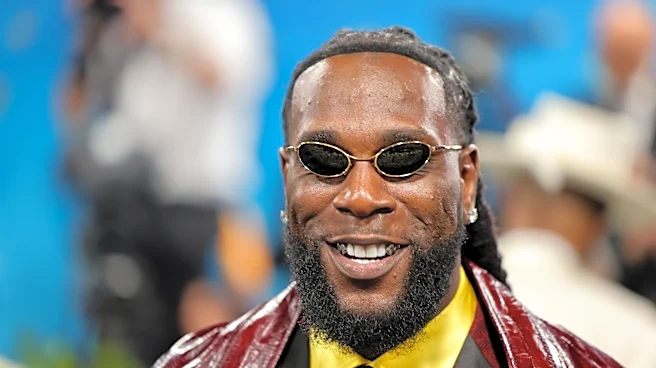
Grammy-winning Afrofusion artist Burna Boy has clarified the royalty arrangement with Toni Braxton for his hit song 'Last Last,' which samples her 2000 track 'He Wasn't Man Enough.' During a 2022 appearance on 'Million Dollaz Worth of Game,' Burna Boy,
whose real name is Damini Ogulu, initially stated that Braxton receives 60% of the song's earnings. He later clarified on 'Shopping for Sneakers' that this 60% applies specifically to streaming royalties, not all revenue generated by the track. Despite the significant percentage, Burna Boy has expressed no complaints, noting that 'Last Last' has earned him more money than any other song in his catalog to date. The song, released in May 2022 as the lead single from his album 'Love, Damini,' significantly expanded his mainstream reach, particularly in the U.S. and U.K. It became the fastest African solo artist track to surpass 100 million Spotify streams, eventually exceeding 600 million, and topped Billboard's Afrobeats Songs chart.
Why It's Important?
This clarification highlights the complex financial dynamics and intellectual property considerations within the music industry, especially concerning song sampling. The substantial royalty share allocated to Toni Braxton underscores the value placed on original works and the negotiation power of established artists. For Burna Boy, despite giving up a large portion of streaming revenue, the sample proved to be a strategic move that propelled 'Last Last' to massive global success, breaking through U.S. radio airplay barriers that he previously faced. This success demonstrates how strategic sampling, even with significant royalty payouts, can be a powerful tool for artists to gain broader mainstream appeal and commercial success. It also sets a precedent for how artists might approach sampling negotiations, balancing creative vision with financial implications, and showcases the enduring value of classic R&B tracks in contemporary music production.
What's Next?
The success of 'Last Last' and the transparency around its royalty structure could influence future sampling agreements in the music industry. Other artists might be more inclined to pursue samples of well-known tracks, even if it means a substantial royalty split, if they see the potential for similar breakout success. This situation may also encourage more open discussions about fair compensation for original creators in an era dominated by digital streaming. For Burna Boy, the continued success of 'Last Last' reinforces his global superstar status, potentially leading to more collaborations and further expansion of his audience. The track's enduring popularity could also lead to increased interest in Toni Braxton's back catalog, benefiting both artists in the long run. The music industry will likely continue to navigate these intricate financial and creative partnerships as sampling remains a prevalent practice.
Beyond the Headlines
Beyond the immediate financial implications, this story touches on the cultural exchange and evolution within music. Burna Boy's successful interpolation of a classic Toni Braxton track demonstrates how different genres and eras can converge to create new, globally appealing sounds. It highlights the enduring influence of R&B on contemporary music and the ability of artists to bridge generational and geographical divides through creative sampling. The transparency around the royalty split also opens a broader conversation about artistic ownership and fair compensation in an industry where intellectual property rights are constantly being re-evaluated. This case could serve as a model for how artists can ethically and successfully integrate samples, fostering a collaborative spirit while respecting the original creators. It also underscores the power of a single song to transform an artist's career trajectory and expand their cultural footprint globally.