



What's Happening?
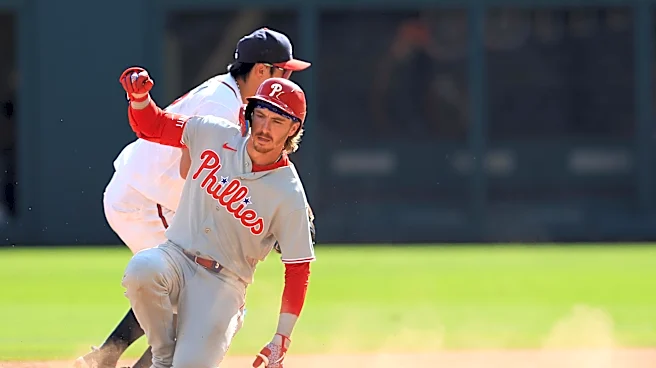
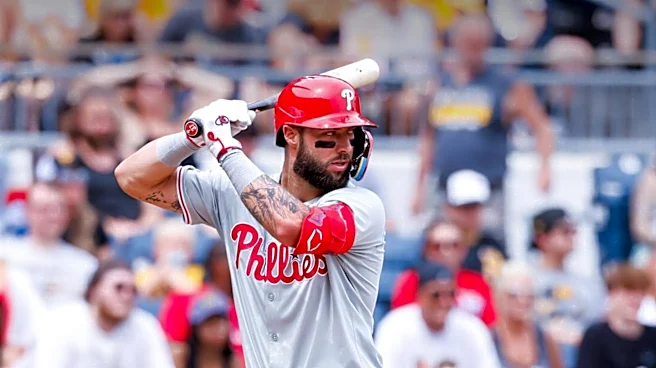
Philadelphia Phillies star Bryce Harper has made comments on TikTok that suggest a potential delay or cancellation of the 2027 MLB season. When asked about an offseason stretching from March to October, Harper replied, 'It will be this year,' and in response
to whether he prefers the offseason, he stated, 'This is true.' These remarks are being interpreted by fans and analysts as an indication of a looming lockout, as the current collective bargaining agreement (CBA) is set to expire on December 1. Harper's teammate, Garrett Stubbs, also expressed concerns on the Phillies Tailgate podcast, calling a missed season 'moronic' but conceding that some games are likely to be missed due to the ongoing salary-cap dispute. The central issue in negotiations between MLB owners and the players' union is the owners' push for a salary cap, a structural change that would significantly impact player salaries and market freedom.
Why It's Important?
The potential for a delayed or missed MLB season carries significant implications for the sport, its players, and the broader U.S. sports industry. A lockout would result in substantial financial losses for players, team staff, and associated businesses that rely on baseball games, such as concessions, merchandise, and local economies around stadiums. For fans, it means a disruption to a major cultural pastime and potential erosion of goodwill. The dispute over a salary cap versus the current luxury tax system highlights a fundamental disagreement on economic structure, with owners seeking competitive balance and cost certainty, while the union argues it suppresses player earnings. This conflict could set a precedent for future labor negotiations in other professional sports leagues, impacting how player compensation and team economics are structured across the U.S.
What's Next?
The immediate next step is the expiration of the current collective bargaining agreement on December 1. A lockout is widely anticipated if an agreement is not reached by this deadline. Following December 1, the focus will shift to statements from MLB and the MLB Players Association, as well as any further comments from prominent players like Harper or Stubbs. The duration of a potential lockout is uncertain, with predictions ranging from weeks to months, potentially delaying the start of the 2027 season until as late as Memorial Day weekend, according to some executives. The outcome of these negotiations will determine the schedule and financial landscape of the upcoming MLB season, impacting players' livelihoods and fan engagement.
Beyond the Headlines
The ongoing labor dispute in MLB, underscored by Bryce Harper's recent comments, reflects a deeper tension between the economic models of professional sports and the rights of athletes. Baseball is unique among major North American sports for not having a salary cap, making the owners' current push a significant structural change. This situation raises questions about the balance of power between ownership and labor, the long-term financial health of the sport, and its appeal to a younger generation of fans. A prolonged lockout could alienate fans, particularly after a 13% drop in postseason viewership in 2026, and force a reevaluation of how the league maintains its relevance and economic viability in a competitive entertainment landscape. The ethical implications of potentially sacrificing a season for financial restructuring will also be a key consideration.